

You know what stinks? The fact that plastic is now a problem. It’s such a great and handy tool, especially around the kitchen. But as we learn more about the health issues caused by microplastics, it’s time to rethink how we are storing our food. Our food, after all, is one of the things we put directly into our body! So how it’s stored matters more than something like, say, jewelry or photos. We are eating this stuff and it can sometimes sit in our fridge in whatever container we put it in for quite a while. (Sometimes longer than we’d like to admit.)
The problem is that microplastics can get transferred from a polypropylene plastic container to the food it’s storing in just three minutes in the microwave. So it goes without saying that we should completely stop microwaving and heating our food while it’s in a plastic container. Other bad things like phthalates and BPA (or its cousins BPS and BPF) leach into food on contact. And things like heat and acidity just make it leach faster.
So what should we do? I’m glad you asked. We put together great options for food storage that aren’t plastic. And while plastic is usually cheaper, you have to remember that plastic needs to be replaced every few years. While many of the items below can last you a decade or more.
1. Glass Containers for Leftovers and Meal Prep
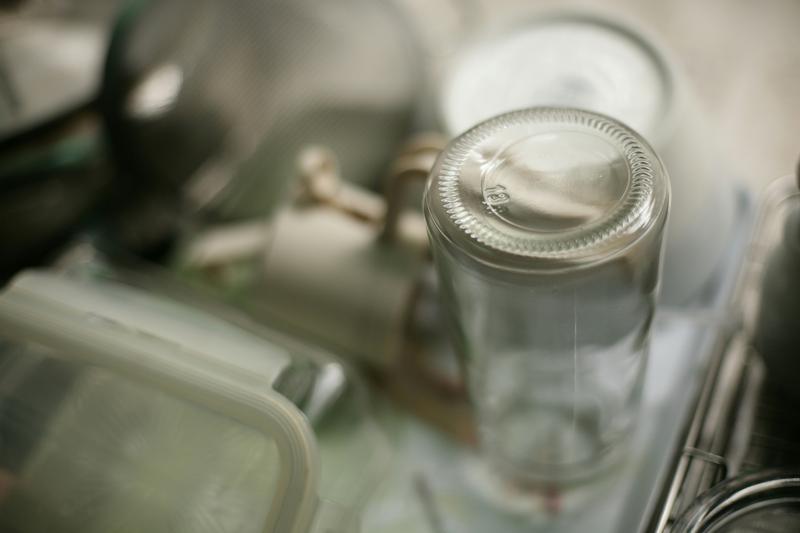
Ahh, good old glass. It’s really the perfect storage vessel for all foods. It’s totally inert. And if you skipped that day in chemistry class, that just means that it doesn’t leach anything into your food. And it doesn’t matter if you are storing stuff that’s hot, cold, acidic or fatty. And it can go into the microwave or oven (make sure the lid is oven safe.) It also doesn’t absorb odors or stains. It is a bit heavier than plastic. And if you drop it, it can break (unlike plastic).
One helpful trick: If you’re buying a set make sure the sizing is consistent so the lids are interchangeable and you’re not digging around the bottom of your drawer trying to find the lid that fits the one in your hand. And opt for Borosilicate glass if you can find it. That is thermal-shock resistant so it’s fine going from the freezer to the oven.
“Just as we understand the impact of calories and nutrients on our health, knowing the extent of plastic particle ingestion is crucial in understanding the potential harm they may cause.”
— Kazi Albab Hussain, Doctoral researcher in Civil and Environmental Engineering, University of Nebraska-Lincoln; lead author of the 2023 EST microwave microplastics study
- Pyrex Simply Store Glass Set — borosilicate glass, BPA-free plastic lids, oven-safe to 450°F — one of the most widely stocked and affordable glass storage lines
- Glasslock Glass Containers (airtight lids) — airtight and leak-proof lids — better for soups and sauces than standard snap lids; the lock mechanism makes them travel-friendly
2. Mason Jars for Dry Goods and Bulk
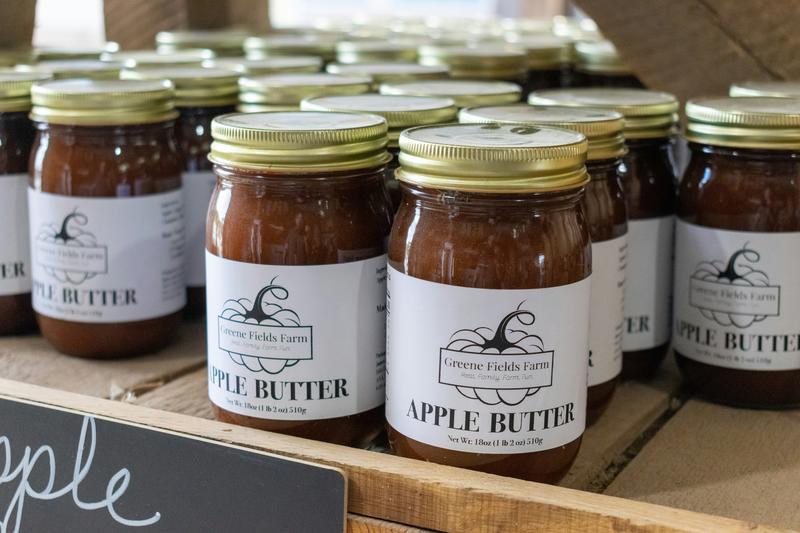
Photo by Kelsey Todd / Unsplash
Mason jars are also a classic. My grandparents used to can fruits and vegetables when I was growing up and they had a storage area in their basement with literally hundreds and hundreds of wide mouth mason jars. They were full of everything from green beans to peaches. It was incredible. Anyway, wide mouth mason jars are so handy. Mostly because it’s so much easier to fill them with stuff. Whether it’s green beans or rice or beans or coffee. They are made to be easy.
Also, it doesn’t matter if you’re using a 8 oz or half gallon size, they all have the same lid size. So whichever lid you find in the drawer is going to work.
“For my baby, I was unable to completely avoid the use of plastic. But I was able to avoid those (scenarios) which were causing more of the release of micro- and nanoplastics.”
— Kazi Albab Hussain, Doctoral researcher in Civil and Environmental Engineering, University of Nebraska-Lincoln; lead author of the 2023 Environmental Science & Technology study
- Ball Wide-Mouth Mason Jars (Quart, 12-pack) — the standard — interchangeable lids, widely available replacement parts, oven and freezer safe
- Ball Plastic Storage Lids for Mason Jars — BPA-free one-piece plastic lids for refrigerator and pantry use (not for canning); much easier to open than screw bands for daily access
3. Beeswax Wraps for Produce, Cheese, and Cut Fruit
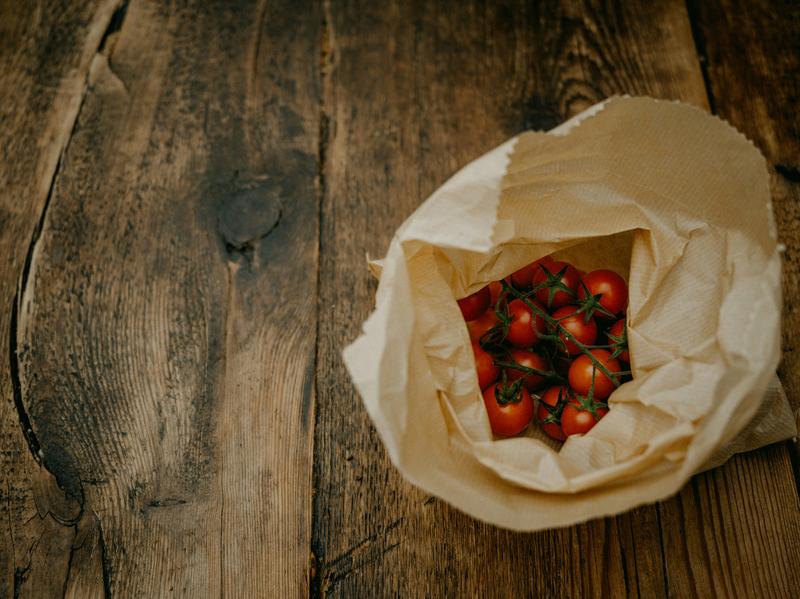
Photo by Annie Spratt / Unsplash
Beeswax is actually pretty fun. Did you know that just using the warmth of your hand will soften it enough to mold it into any shape. And then when it cools (or when you put it in the fridge) it will hold its form enough to create a breathable seal. That breathable seal makes them not perfect for everything, but better than plastic for lots of produce, cheese, bread and cut fruit. This usually isn’t thought of as a pantry staple, but it definitely should be.
One thing to note, don’t use beeswax for raw meat or fish. And don’t wash it in hot water because that will melt the wax coating.
- Bee’s Wrap Reusable Beeswax Wraps — This is the brand that put beeswax on the map. It’s sustainably sourced and one three pack will cover you for most uses.
- etee Beeswax Wraps — This is the vegan version of beeswax. Completely plant-based that uses carnauba wax instead of the traditional beeswax.
4. Silicone Bags for Freezer and Snacks
Photo by Leila Barrani / Unsplash
Silicone is kind of a surprising one on this list. Mostly because I always think of silicone as some sort of type of plastic. But in reality it’s a fantastic option for kitchen storage. It doesn’t leach chemicals at cold or hot temperatures. And it can be used in the dishwasher. It also makes a great replacement for the traditional ziploc-style freezer bags because you can reuse the silicone. Which means you don’t have to keep buying plastic bags every week and silicone will last for years.
“That tells us that, as widespread as these chemicals are, there are ways to reduce how much is in our foods.”
— James E. Rogers, PhD, Director and head of product safety testing, Consumer Reports (microbiologist)
Helpful hint: Make sure that the silicone you’re buying is food grade. Which means it’s 100% platinum silicone and not “silica-filled.”
- Stasher Reusable Silicone Bags — 100% platinum food-grade silicone, dishwasher and microwave safe, pinch-lock seal — the market standard for reusable silicone bags
- Zip Top Silicone Bags — stand-upright design for easier filling; same platinum silicone; the wide-mouth opening makes them easier to clean than the Stasher pinch design
5. Stainless Steel for Lunch and On-the-Go
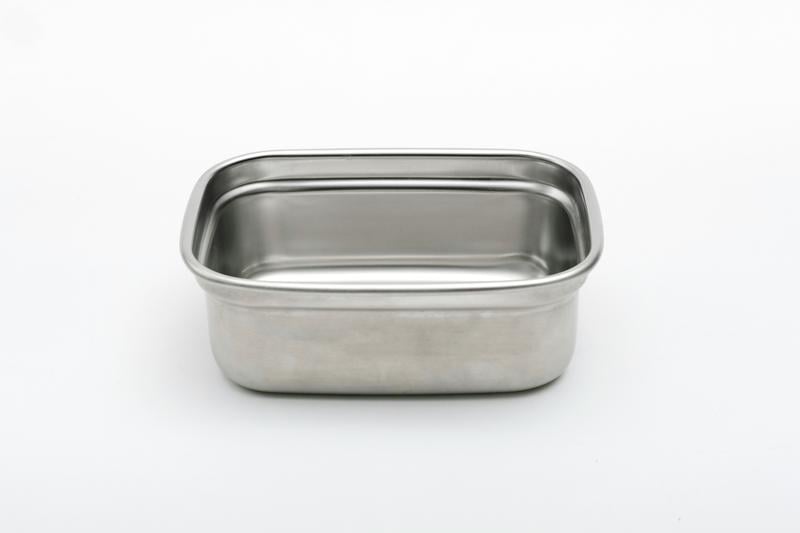
Super durable and lighter than glass, stainless steel is great for when you need to take food somewhere. If you’re taking your lunch to work, or going to a pot luck, stainless steel is the way to go. As long as you get the 18/8 food-grade stainless steel it won’t leach anything into your food. And you can drop it getting in and out of your car and it won’t be any worse for wear.
If you spring for the insulated stainless steel it can keep your food hot or cold for hours.
“The more we learn about these chemicals, including how widespread they are, the more it seems clear that they can harm us even at very low levels.”
— Tunde Akinleye, Food safety scientist, Consumer Reports (oversaw CR’s plastic-chemical food testing)
- PlanetBox Rover Stainless Steel Lunchbox — multi-compartment 18/8 stainless, no plastic interior surfaces, dishwasher safe — the benchmark for a plastic-free packed lunch
- Thermos Stainless King Food Jar — insulated stainless for hot or cold — keeps food at temperature 5+ hours; the most practical option for soups, grains, or warm leftovers
6. Cloth Produce Bags for Shopping and Refrigerator Storage
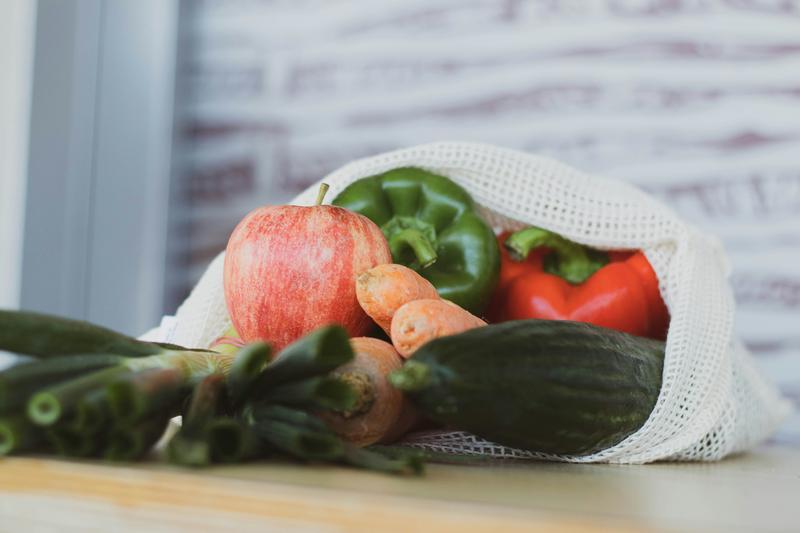
Photo by Benjamin Brunner / Unsplash
OK, I have a confession to make. While I use all the other items on this list, these mesh or muslin bags are ones that I need to get more acquainted with. I don’t think I’ve ever used them. I usually just put my produce in the crisper naked (I’m not naked, but the fruits and veggies are.) If you’re a person that leaves them in the plastic bags from the grocery store, you should switch, too. Mesh and muslin are much more breathable than plastic and will let your produce last way longer.
Usually these bags are machine washable so you can use them for a long time.
“Since bisphenols and phthalates are hazardous chemicals, they should not be allowed at all in food-contact materials.”
— Erika Schreder, Science Director, Toxic-Free Future
- Simple Ecology Organic Cotton Produce Bags — GOTS-certified cotton mesh in multiple sizes — lightweight enough that the tare weight barely registers on a grocery scale
Making the Transition Without Spending a Fortune
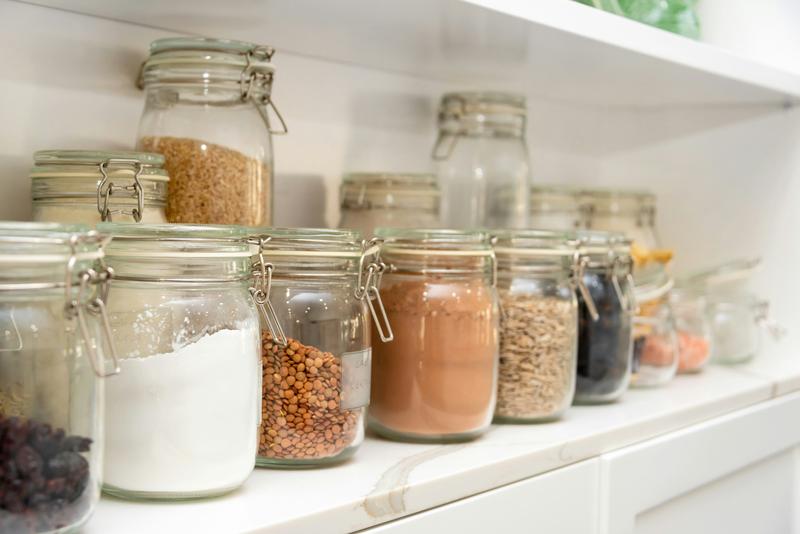
Photo by Steven Ungermann / Unsplash
If you want to limit your exposure to microplastics, you don’t need to make all these sweeping changes tomorrow. Start methodically by doing the most important things first. Follow the list below and you’ll be on your way!
- Don’t microwave food in plastic containers — This is the simplest, easiest and free-est way to cut microplastics out of your food. If you order Uber Eats or some other delivery service that brings your piping hot food in those black plastic containers, transfer it immediately to a glass or ceramic vessel and reheat it from there. This will cut out the biggest source of microplastic-to-food transfer.
- Replace your most-used plastic containers with glass — Just ditch your plastic go-to containers. And make your go-to containers glass. We’re not saying never ever use plastic, but if you use glass 90% of the time you will make a big impact on your microplastic intake.
- Get a set of mason jars — A dozen wide mouth quart jars are great for storing flour, nuts, seeds, dried fruit, beans….the list goes on. And they look nice when they’re all lined up on a shelf.
- Add beeswax wraps and silicone bags — Beeswax and silicone should become your new go-tos for produce and dairy (cheeses, not liquids, lol.)
Start to incorporate these changes now and you’ll have cut down your microplastic intake in a matter of weeks if not months. And while they may be more expensive up front, the long term savings will more than make up for it.

Cory Jones has spent 20 years in media and publishing and now leads the data and editorial operation behind The Greenest. He built and maintains the site’s Neighborhood Wellness Score — a proprietary dataset scoring food access, walkability, air quality, healthcare access, and health outcomes across 18,356 U.S. ZIP codes, drawing on CDC PLACES data, EPA air quality readings, and verified location intelligence. He turned 50 last year, is a huge fan of Rancho Gordo beans, and tries to work out more than he actually works out.
Is your neighborhood healthy?
Get a free report on your tap water, air quality, walkability and more


