
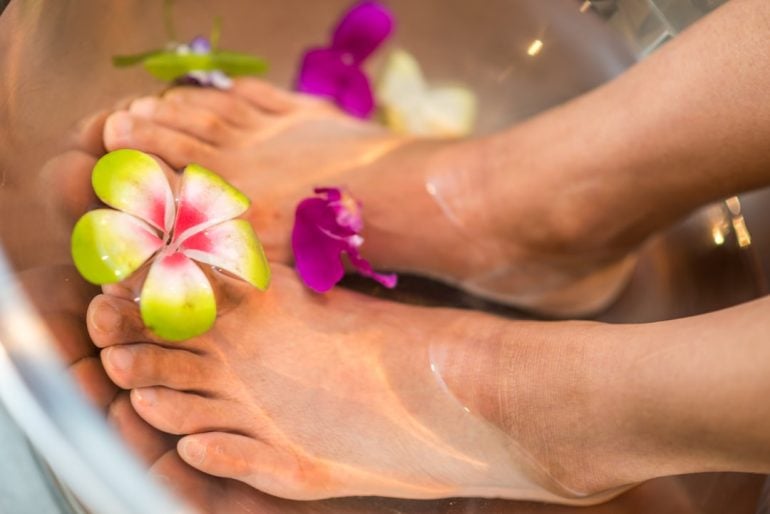
We really hate words like “detoxify” at The Greenest. Why? Well, because those sorts of things can’t really be measured by data or science. What’s a toxin? How many toxins are too many toxins? Who knows! But when we see article after article talking about novel ways you can detoxify yourself, we like to set the record straight. And separate the fact from the fiction.

The detoxifying ionic foot bath is a perfect example. This is a hundred million dollar industry built on basically marketing because the idea is compelling. You put your feet into the bath, the machine then turns the water brown. So people think that the brown is the toxins leaving your body through your feet. The problem? There’s no “toxins” from your body in that water.
The water changes color because the metal electrodes corrode and release iron oxide. Nothing at all is getting pulled from your feet. There have been numerous independent lab tests that have repeatedly shown that there is no difference in the amount of heavy metals or other toxins in the water when a person’s feet are in there or not.
So why are we here?
What Your Body’s Actual Detox System Does
If you’re thinking of giving foot detox patches, foot scrubs or foot baths a try, you may be disappointed to learn that detoxification doesn’t take place through your feet. In fact, detoxification is something that takes place constantly and effortlessly, courtesy of your hard-working liver and kidneys.
Toxins converted by your liver from fat-soluble to water-soluble are eliminated by your constantly filtering kidneys, which remove toxins from the bloodstream. There’s nothing exotic or unusual about this process. It’s going on whether you’re asleep or wide awake. You can help your liver and kidneys along by drinking plenty of water, eating a diet that’s rich in fiber and limiting the amount of foods and drinks that stress these organs.
Sweat glands located in your skin and feet release toxins, but this mechanism eliminates a tiny amount when compared to the amount eliminated by the liver and kidneys. There’s also no mechanism in the feet for pulling toxins out of the bloodstream and body. Soak away, just know that any perk-up will be thanks to increased circulation and relaxation, not detoxification.
“The liver is our detoxification machine. It’s made to do this. Detoxifying the normal things we eat, breathe and ingest is part of its job and keeps us alive. It will handle all the things it needs to handle as long as it’s a healthy organ.”
— Dr. Thomas Aloia, MD, hepatobiliary (liver) cancer surgeon, MD Anderson Cancer Center
1. Epsom Salt Foot Soaks

An Epsom salt soak is a lot like a warm bath. The heat of warm water encourages your parasympathetic (relaxation) nervous system to relax, particularly after a long day. And, spending 20 minutes sitting still has therapeutic effects in and of itself. Afterward, you’ll likely find that your legs feel looser, although hot water would have a similar effect on your muscles.
Epsom salt doesn’t increase your magnesium levels meaningfully. However, it is true that soaking in Epsom salt can help soften the skin of your feet. This can make it easier for you to tackle pesky calluses.
If you’re magnesium-deficient, Epsom salt foot soaks aren’t going to fix that. Talk to your doctor about supplementation. Just know that any positive effects are likely to be due to the ritual itself, the warm water and nothing more, as there is no detoxification or rejuvenation going on.
“Warm baths alone have benefits with aches and easing tension. Whether Epsom salt improves this is yet to be fully understood due to a lack of research and evidence.”
How to use: Just drop a ½ cup of Epsom salt in a foot-sized tub of warm water. (If it’s not totally foot sized that’s fine, too.) But you only need enough to cover your feet. Think of it as up to your ankles. Don’t make it too hot! Then soak them for 15-20 minutes three-four times per week.
2. Bentonite Clay Foot Mask

You may have heard that wearing a bentonite clay foot mask helps to draw out toxins. This isn’t exactly true, but wearing a bentonite clay foot mask can still help with smelly feet. Bentonite clay is an effective degreaser that helps to lift away grime and absorb any sweat byproducts that feed the odor-causing bacteria. It can help to soften your feet, removing rough skin and easing calluses. Once you wash it off, your feet will be smoother, cleaner, and less smelly. Bentonite clay doesn’t draw out toxins. It cleans. Bentonite clay foot masks are quite drying, so limit yourself to wearing them no more than once per week for best results and healthy feet.
“Bentonite clay is so absorbent, it’s like a sponge that binds to oil and dirt on the skin’s surface.”
— Dr. Joshua Zeichner, MD, board-certified dermatologist; Director of Cosmetic & Clinical Research in Dermatology, Mount Sinai Hospital, NYC
How to use: You only need two tablespoons of bentonite clay. Mix it with however much water or apple cider vinegar you need to form a thick paste. Put it on your feet and leave it on for no more than 10 minutes. Don’t try to walk around because you’ll leave footprints everywhere you go. Only do this once a week, tops.
3. Ginger Foot Soak for Circulation

The ginger makes the water feel hotter than it really is. That means if you have particularly cold feet during the winter, ginger foot soaks will warm them right up. It’s not going to drain your lymphatic system but it can serve as a relaxing at-home remedy for cold feet.
The hot, cozy feeling is therapeutic and comforting. If you enjoy a relaxing soak before bed in the colder months, give your feet some relief with a ginger foot soak. It won’t heal anything or detoxify you.
How to use: Pop over to your fridge and grab the stick of ginger that has been sitting in the crisper for the last month. Grate about two inches of it into warm water. You can also use a tablespoon of ginger powder if you’re using the foot-sized basin. Soak for 15 minutes. Don’t worry if your feet start to get red. That’s increased blood flow, not irritation.
4. Contrast Hydrotherapy

This is one of the few foot treatments here with evidence behind it. Alternating warm and cold water for your feet causes the blood vessels to expand and contract which can help to relieve swelling by pumping stagnant blood and fluids from the legs.
Your legs will feel noticeably lighter almost immediately. It helps with that heavy-leg feeling. It can also help sore legs recover a bit faster after exercise. The effects last hours rather than days, so it has to be done consistently.
It does nothing about whatever is causing the fluid to pool in the first place.
“Muscle soreness, muscle damage, strength, and power all appear to recover quicker after [contrast water therapy] compared to no intervention.”
How to use: For this one you’re going to need two foot-sized basins. Fill one with cold water (feel free to use ice), and the other with water that is as warm as you can take it. Put your feet in the warm one for three minutes, and then the cold one for one minute. Do this three times, ending with the cold. You’ll need to do this 3-4 times per week to really get the benefits.
5. Peppermint or Tea Tree Soak

Peppermint can be added to a foot bath to produce a cooling effect. The compound that makes up peppermint (menthol) tricks your nerve receptors into thinking that the temperature has been reduced. The temperature of your feet will not actually change. That said, the sensation of coolness can last for up to 1 hour after a peppermint foot soak. However, any claims that peppermint detoxes your body are not true.
Tea tree oil can help with odor and athlete’s foot thanks to its antifungal properties. That said, a foot bath, even one with tea tree added, will be much less effective than applying tea tree oil directly to your feet. Tea tree will not treat stubborn conditions like toenail fungus, for which you should see your doctor for a stronger treatment. Try using tea tree daily for 2-4 weeks to determine if it’s helpful for any fungal or odor-causing issues you’re having. Make sure your pets cannot access the bowl, as licking their paws or drinking from it could lead to accidental ingestion of the oil which could prove toxic.
“Terpinen-4-ol, a major constituent of tea tree oil, exhibited antimicrobial activity against Candida albicans, Escherichia coli, Staphylococcus aureus, and Pseudomonas aeruginosa.”
How to use: Just drop anywhere from 5-10 drops of the oils into some warm water. Don’t put it directly on your skin. Let it soak for 15 minutes. If you’re looking for the antifungal application, you’ll need to do it every day for two weeks.
6. Foot Massage and Pressure Points

You may have seen or even bought a reflexology chart. They’re little maps of your feet with illustrations of your organs and instructions for massaging certain pressure points to help your liver or kidneys or whatever part of your body is feeling under-the-weather. Reflexology charts suggest that pressing on certain areas of your feet detoxes corresponding organs of your body. It’s a story that sells. But there’s no scientific evidence that reflexology does what sellers of reflexology say it does.
That said, foot massage does help reduce stress. When someone gives you a foot massage, applying pressure to the bottom of your feet and kneading the area stimulates your body’s parasympathetic response. This reduces the production of the stress hormone cortisol and slows your heart rate. As a result, you feel more relaxed and less anxious.
Chances are, when someone gives you a foot massage, your shoulders will relax, too. You’ll likely stay relaxed anywhere from several minutes to a couple of hours after your massage, depending on how stressed-out you are. Apply pressure to each foot for 5 to 10 minutes to receive all of the massage’s relaxing benefits. More than 10 minutes per foot won’t make it last longer.
“The positive effects of massage therapy derive from the movement of the skin and the stimulation of pressure receptor cells under the skin. When the skin moves, it increases vagal nerve activity.”
— Dr. Tiffany Field, PhD, Director, Touch Research Institute, University of Miami Miller School of Medicine
How to use: Get yourself a nice massage ball roller (we have one below). Then roll your arch, heel and ball of your feet on the roller for 5-10 minutes per foot. Using before bed can help sleep quality.
The Bottom Line on Foot Detox
Foot detoxes don’t detox. There is no scientific evidence that proves that your body pulls poisons in through your feet and then releases them the same way. Contrary to what advertisers say, detoxification is something that happens naturally. Your liver and kidneys work to detoxify your body.
Foot care can help you feel better because it may increase circulation and lymphatic flow. Certain types of foot fungus can also receive some therapeutic benefits through basic foot care. Foot care is worth doing because it encourages blood flow and promotes healthy skin. Just don’t spend money on a commercial foot detox package, because it won’t do anything for your health.
“The entire notion of detoxification as used and promoted in alternative medicine is biologically meaningless and confers absolutely no health benefits. […] The only thing that detox removes is money from your wallet.”
— Edzard Ernst, MD, PhD, FRCP; Emeritus Professor of Complementary Medicine, University of Exeter

Natalie Antaya is a wellness writer at The Greenest covering nutrition, everyday health habits, and practical self-care. She has a knack for taking confusing or trend-driven health topics and sorting out what’s actually worth your time, money, and attention.
Is your neighborhood healthy?
Get a free report on your tap water, air quality, walkability and more


