Sometimes making a change in your life that can have a big impact feels a bit daunting. When most people think about “being healthier” they think they need to spend hours each week in the gym. Or stop eating all the things they love to eat (or drink.) And it becomes so daunting that they end up doing nothing at all. There’s a new study out that shows you how stacking some small changes throughout the day can have a huge difference in longevity. It’s almost funny how some really small changes can really add up.
The new study, by the University of Sydney, wondered what the smallest change someone could implement that could have a statistically significant impact on longevity. And the answers were kind of mind blowing. When you stacked a few small changes, they really made a difference. The minimum combination was just adding 5 minutes of sleep per night, two minutes of moderate exercise and just a half serving of vegetables each day turned into almost an additional year of life vs those that did nothing at all. And if you maxed out the combinations (7-8 hrs sleep, 40+ min activity, healthy diet) that could add an additional 9 years of lifespan. But there’s more! It also increases your healthspan, too. And healthspan is the quality of your lifespan. No one wants to live forever if you can’t move or live a fulfilling life. A high quality lifespan means you live longer while still being active and “with it” mentally.
Here’s What It Looks Like
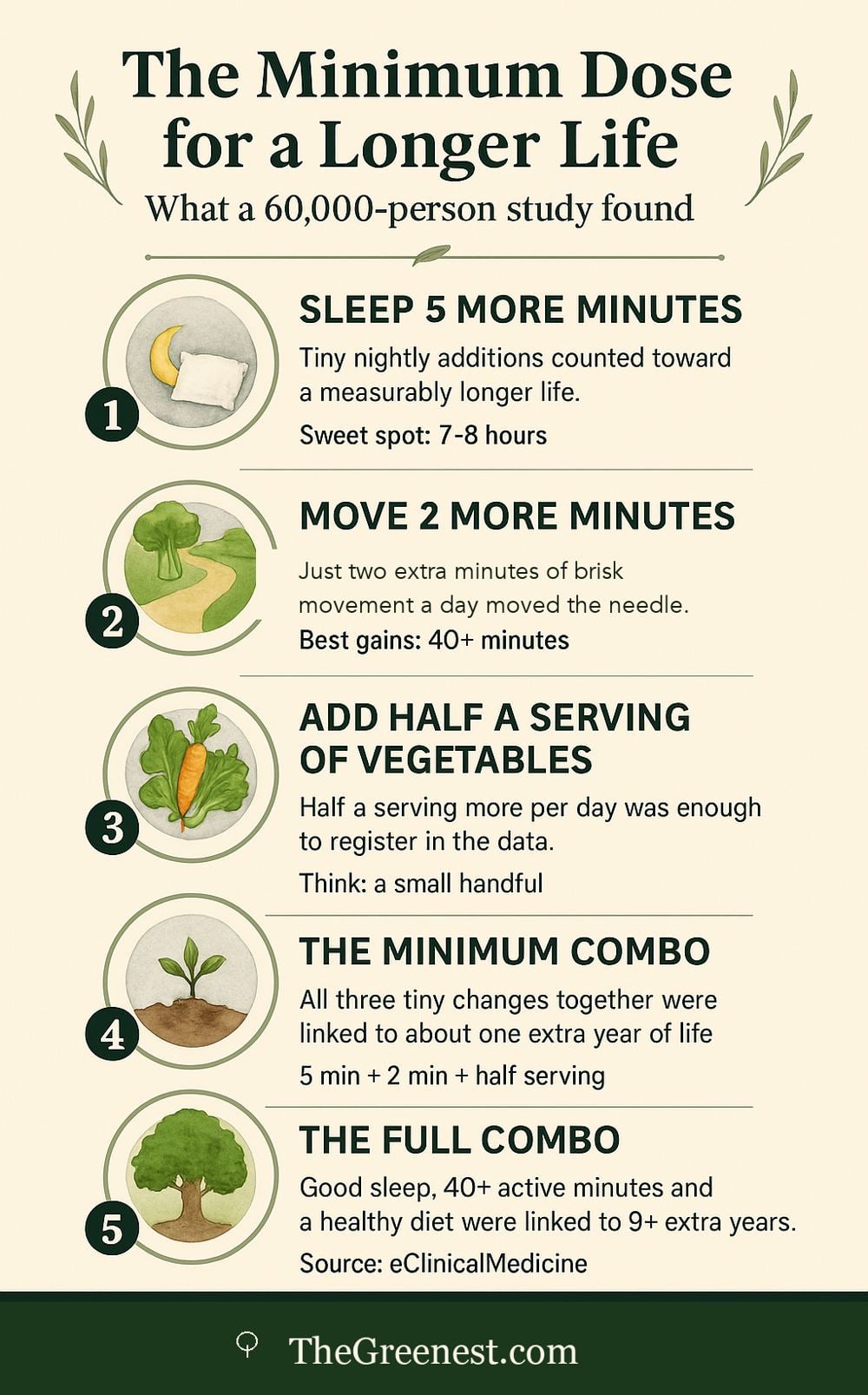
“Sleep, physical activity and nutrition are all factors known to be linked to healthier lives, but they are usually studied in isolation. By investigating these factors in combination, we can see that even small tweaks have a significant cumulative impact over the long-term.”
— Dr. Nicholas Koemel, Charles Perkins Centre, University of Sydney
As we say with all studies, nothing (if ever) is a silver bullet. There could be a range of factors that aren’t accounted for here and these results may not work for everyone. But when you add this to the pile of statistical data we have around the importance of sleep, exercise and healthy eating, it does make a lot of sense. Again, no guarantees, but if you’re going to do anything, why not do this?
“We always think that we need to make these massive overhauls, especially at the beginning of the year with New Year’s resolutions… tweaks add up to make something meaningful. And that might make us be able to sustain them much further in the long run.”
— Dr. Koemel, to NBC News
When you take this study, with the one from the Lancet (which studied 135k adults and found that five minutes of additional moderate-paced walking each day equated to 10% lower early mortality), it really does start to make us a bit more confident in these results.
“Inactive lifestyles are associated with a range of health problems and this study shows the huge public health benefit from even small increases in physical activity.”
— Professor Melody Ding, School of Public Health, University of Sydney
The next time you or anyone you know complains about not having time to live better, remember this!

Cory Jones has spent 20 years in media and publishing and now leads the data and editorial operation behind The Greenest. He built and maintains the site’s Neighborhood Wellness Score — a proprietary dataset scoring food access, walkability, air quality, healthcare access, and health outcomes across 18,356 U.S. ZIP codes, drawing on CDC PLACES data, EPA air quality readings, and verified location intelligence. He turned 50 last year, is a huge fan of Rancho Gordo beans, and tries to work out more than he actually works out.
Is your neighborhood healthy?
Get a free report on your tap water, air quality, walkability and more