The supplement aisle is a bit of a conundrum. On one hand, supplements can be hugely beneficial for those who have deficiencies in some vitamins and nutrients. But on the other hand, the supplement aisle can be a bit dangerous, and a lot of people don’t realize that. Why? Because for one reason, there are supplements everywhere. The supplement aisle has gotten bigger and bigger over the last couple decades. And for another reason, they market themselves as essentially medicine, but the vast majority of them are not FDA approved (one big problem with the supplement industry is that usually the FDA doesn’t get involved with a supplement company until after there’s a problem.)
So if you combine both of these issues, many people think that supplements are proven safe. And while the vast majority are safe, there are some really important things to know if you’re going to start taking them. Especially if you are combining multiple supplements together. Because there can be some significant negative side effects on your health when you combine the wrong ones (and sometimes at the wrong times.)
“Supplements can have important impacts on the body, so they should be taken carefully and thoughtfully.”
Dr. Pieter Cohen, associate professor at Harvard Medical School, who leads the supplement research program at Cambridge Health Alliance — TODAY.com, 2026
In this article, we will look closely at a number of supplement and drug combinations worth considering separating or changing up as well as explain the reasons behind some common warnings. And when it comes down to it, supplements aren’t always what you think they are — many times they can interact with prescription medications in ways that are more significant than combining two supplements.
The Short Answer
I’m sure you’ve seen tons of “don’t mix these supplements” infopgraphics and charts across social media. But how do you know which ones are backed by data and research and which ones are just anecdotal (or totally made up.) First thing you should do is ask your pharmacist about your entire supplement routine to see what they say. But check out this list below as well.
We went through each of the most popular “don’t combine these supplements” lists and measured each one against clinical studies and data. Quite a few of them seem to be made up, but at least three of them are worth really knowing and changing your supplement routines if you take any of the below.
What Actually Needs Separating
- Separate iron and calcium by 2–4 hours.
- Take iron at least an hour before tea (or coffee).
- Cap zinc at the tolerable upper intake level for adults, 40 mg per day, set by the NIH Office of Dietary Supplements. If you take high-dose zinc long term, discuss copper with your doctor.
- Give iron and zinc 4 hours apart if you’re taking each on an empty stomach.
Note: These suggestions are meant to help when it comes to separating supplements. But they also serve as a reminder that calcium or iron should be separated by 4 hours from levothyroxine, and for minerals and other nutrients with quinolone (e.g., ciprofloxacin) and tetracycline antibiotics (e.g., doxycycline), you can ask your pharmacist.
1. Iron + Calcium

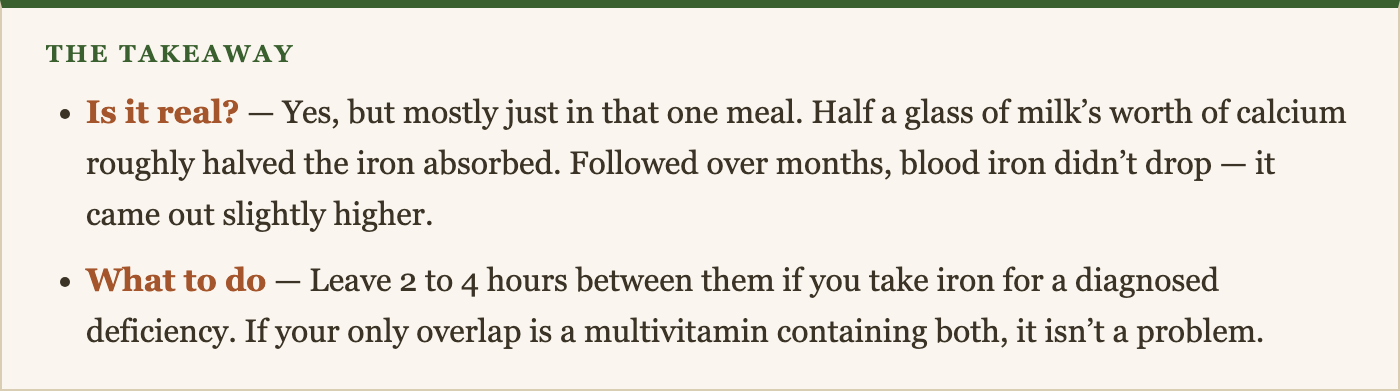
- Separate iron supplements and calcium at least 2-4 hours apart. This helps increase the amount of nonheme iron your body absorbs.
In one study by Hallberg and colleagues, researchers found taking 165 mg of calcium with a meal containing nonheme iron reduced absorption of the iron to about half its original amount. However, it appears that this effect is only seen when consuming between around 40–300 mg of calcium at once — after which there may be little impact on your body’s ability to absorb the iron.
A pooled analysis from the Harvard T.H. Chan School of Public Health found a 5.57% reduction in iron absorption, but it also showed that those who consumed calcium and iron together had higher hemoglobin levels than when they only took one of them.
In practice: while separating iron from calcium can be beneficial for people experiencing anemia due to low body iron stores (especially those taking a supplement containing both nutrients), there isn’t much evidence supporting the need to separate these two supplements if you’re consuming them as part of your diet. And yes, some multivitamins do include both — but don’t let this discourage you from getting what you need in other ways.
2. Iron + Coffee or Tea

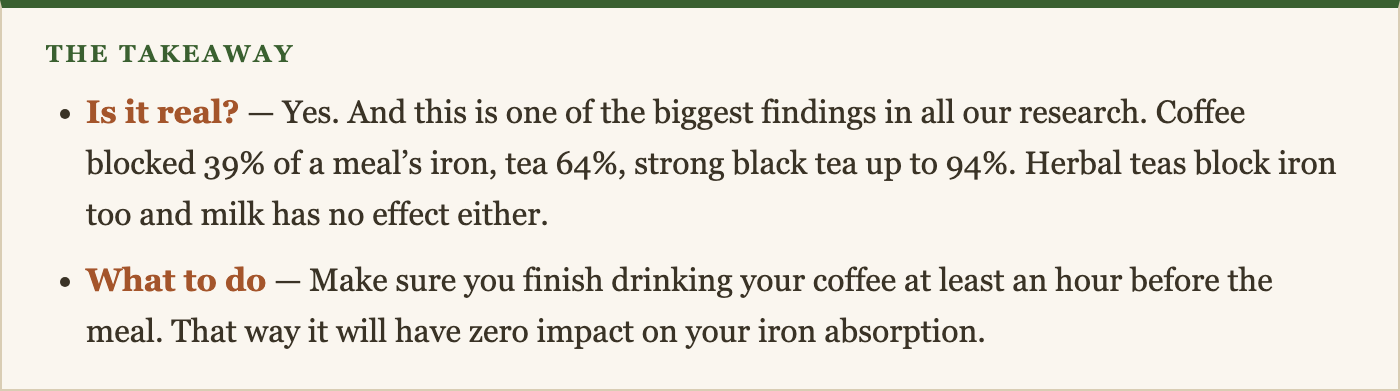
Make sure you finish your coffee, tea or cocoa at least an hour before taking your iron supplement — especially if you’re taking it on an empty stomach.
In a 1983 study in the American Journal of Clinical Nutrition, researchers found that taking coffee with a meal containing nonheme iron reduced absorption from about 5.88% to only around 0.53%. The reason why is that coffee, tea and cocoa all contain things called polyphenols. And polyphenols basically latch onto iron when it comes across it in your stomach and it doesn’t let you absorb it. And tea is actually worse than coffee.
In short, coffee essentially blocks about 39% of iron absorption while tea blocks about 64%. And it is not just black tea. Black tea blocks the most, up to 94%, and peppermint about 84%. Cocoa blocks about 71%. And chamomile was the best and only blocked about 47%.
And adding milk doesn’t make any difference.
The one thing you can do is to make sure you finish drinking your coffee, tea or cocoa at least an hour before you’re eating an iron-rich meal or taking an iron supplement. If you’ve had those an hour before, the study found no reduction in iron absorption, while the same drinks taken with the meal did reduce it. How much coffee blocks iron also depends on how strong it is.
3. High-Dose Zinc + Copper

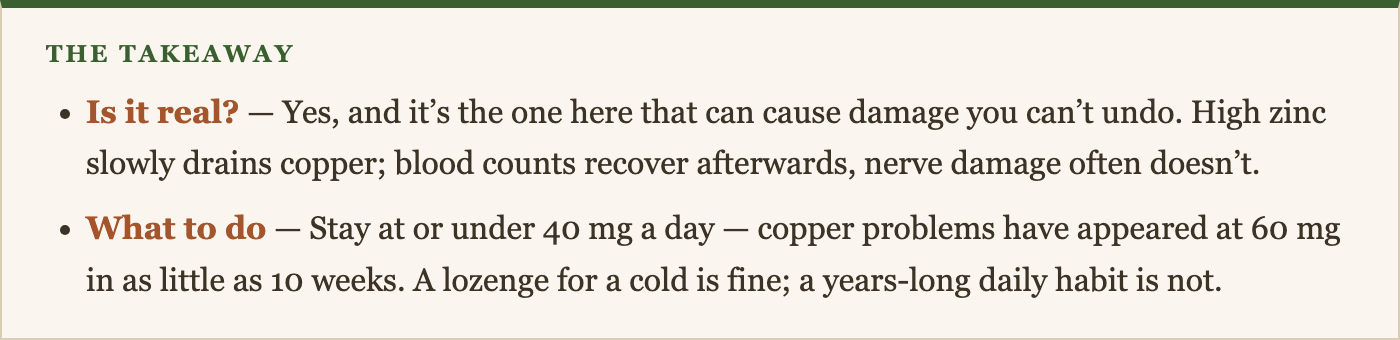
If you are taking a high-dose zinc supplement ask your doctor to test your copper.
According to NIH ODS, the average adult needs about 900 micrograms of copper each day. Zinc is the one with a ceiling: 40 mg a day for adults. Push that to 60 mg and copper deficiency has shown up in as little as 10 weeks.
Zinc blocks copper absorption by activating a protein on the surface of cells lining your gut that binds to copper and carries it out with old cell sloughing.
In Neurology and Nature Clinical Practice Neurology are case reports describing neurological problems from copper deficiency myeloneuropathy (numbness, unsteady gait, weakness caused by spinal cord damage), as well as the blood disease pancytopenia (which mimics myelodysplastic syndrome).
Blood counts recover with copper replacement. But the nerve damage often does not.
“The only people that I’ve seen with a copper deficiency are folks who’ve been supplementing excessive amounts of zinc for long periods of time.”
Dr. Zachary Mulvihill, integrative medicine physician at Weill Cornell Medicine and NewYork-Presbyterian — TODAY.com, 2026
A single lozenge is fine; the daily 50 mg habit is the problem.
4. Iron + Zinc

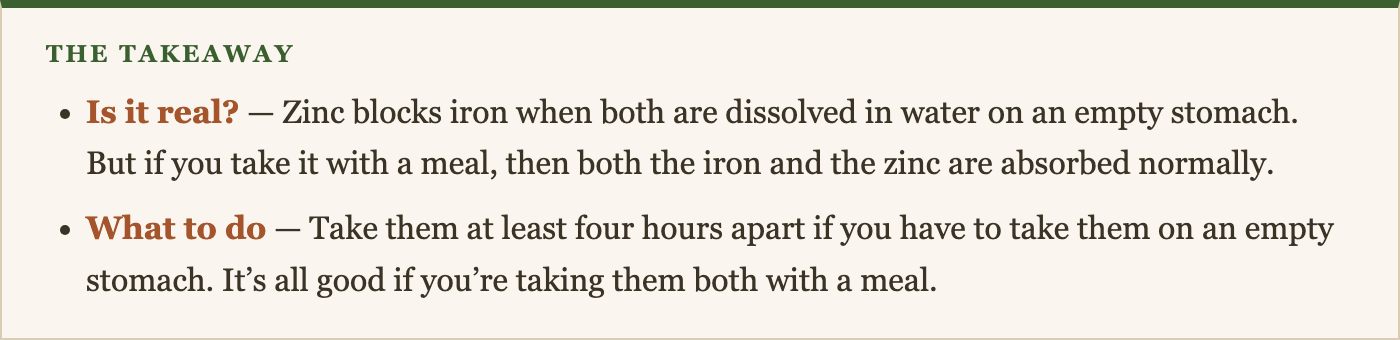
Although this warning appears in several popular sources, the effect is likely overstated (see Biometals by researchers at University of Chile).
In their study in Biometals they found the interaction depends on dose and ratio and lasts under 30 minutes. More importantly, when iron and zinc were given together in composite hamburger meal, premature formula, human milk or cow’s milk there was no observed interaction.
“Several studies showed that high iron concentrations can negatively affect zinc absorption in adults when these trace minerals are given in solution. However, when iron and zinc are given in a meal, this effect is not observed.”
FDA Center for Food Safety and Applied Nutrition, reported in the American Journal of Clinical Nutrition, 1998 — American Journal of Clinical Nutrition
Iron is best absorbed on empty stomach — which is where the interaction occurs. Hence, why we use four-hour rule with separate doses of iron and zinc pills.
5. Calcium + Magnesium

This warning may be backwards:
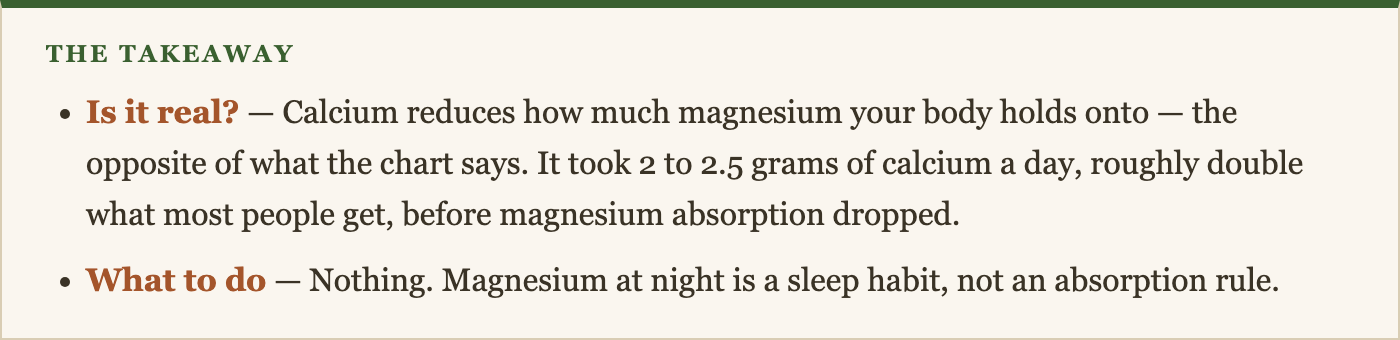
A review in Advances in Nutrition found calcium reduces the retention of magnesium in human subjects. In balance studies on young adults, a calcium intake of 2-2.5 g/day was associated with lower magnesium absorption.
No primary source has been found for claim that calcium + magnesium together cause bloating or “digestive sensitivity.” Magnesium oxide and citrate can have this effect.
Taking magnesium at night and calcium earlier is fine. It is a convenience rule about sleep, not an absorption rule.
6. Vitamin C + Vitamin B12

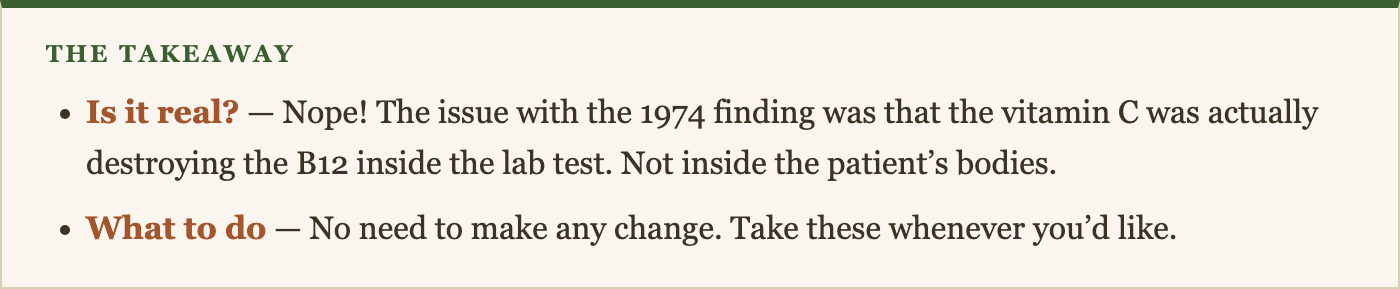
In 1974, JAMA published a paper reporting that vitamin C destroyed B12 in the stomach.
“A previous report suggested degradation of vitamin B12 under these conditions, but this was apparently caused by incomplete protection of the extracted vitamin B12 in the assay procedure. … one must conclude that high doses of ascorbic acid do not affect the stability of vitamin B12 in vivo.”
JAMA, 1979 — JAMA, 1979
“Vitamin C causes B12 to break down, theoretically.”
Dr. Zachary Mulvihill, integrative medicine physician at Weill Cornell Medicine and NewYork-Presbyterian — TODAY.com, 2026
7. Vitamin D + Vitamin K

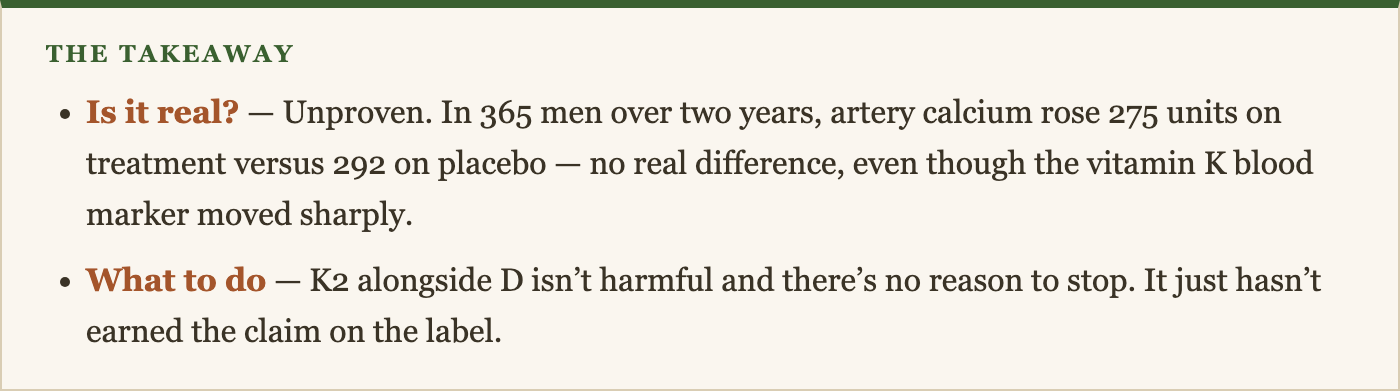
Vitamin D increases calcium absorption while vitamin K activates proteins that keep calcium out of arteries and into bones. A trial was conducted (AVADEC) by Danish researchers on 365 men, average age 71:
They received 720 micrograms of MK-7 plus 25 micrograms of vitamin D daily for 24 months, or placebo. Calcification scores rose 275 units with treatment versus 292 with placebo (P=0.64). There was no difference in aortic valve area, peak jet velocity, coronary calcification, valve surgery, death or cardiovascular events.
8. Omega-3 + Blood Thinners

The scariest of these warnings has some of the weakest clinical evidence.
“Fish oil supplementation did not increase perioperative bleeding and reduced the number of blood transfusions. … These novel findings support the need for reconsideration of current recommendations to stop fish oil or delay procedures before cardiac surgery.”
Circulation: Cardiovascular Quality and Outcomes, 2018 randomized trial — Circulation: Cardiovascular Quality and Outcomes, 2018
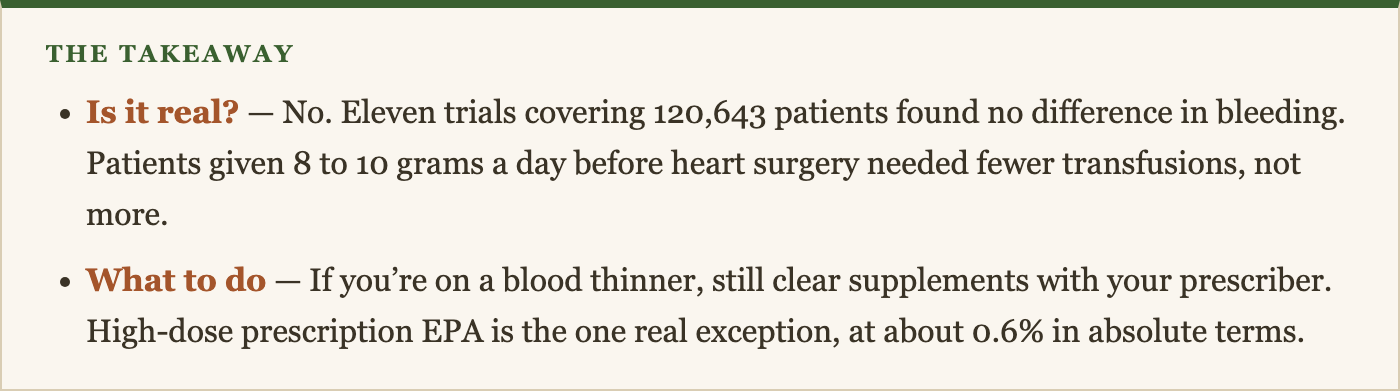
A meta-analysis published in 2024 in the Journal of the American Heart Association looked at the effect of omega-3 fish oils on bleeding risk. The analysis included eleven randomized trials, involving 120,643 patients.
There was no significant difference in bleeding between those receiving Omega 3s versus placebo: rate ratio (95% CI) = 1.09 (0.91–1.31; P=0.34)
However there was a higher incidence of bleeding for the group taking high dose, purified prescription EPA: relative increase in bleeding events of about 50%. This translates into an absolute increase of just over 0.6% in those at risk.
In another randomized trial published in 2018, one thousand five hundred and sixteen patients were given omega-3 fish oils for two to five days before cardiac surgery: daily dose ranged from eight to ten grams.
There was no significant difference in bleeding rate between those taking Omega 3s or placebo; odds ratio, OR=0.81 (95% CI, 0.53–1.24).
The group receiving Omega-3 fish oils needed significantly fewer blood transfusions: mean number of units required for the two groups were 1.61 in those taking the Omega 3s versus 1.92 in the placebo group; P<0.001.
While Omega-3s may affect platelet function in a laboratory setting, they don’t seem to have this effect in patients.
9. Turmeric: Right to Worry, Wrong Organ

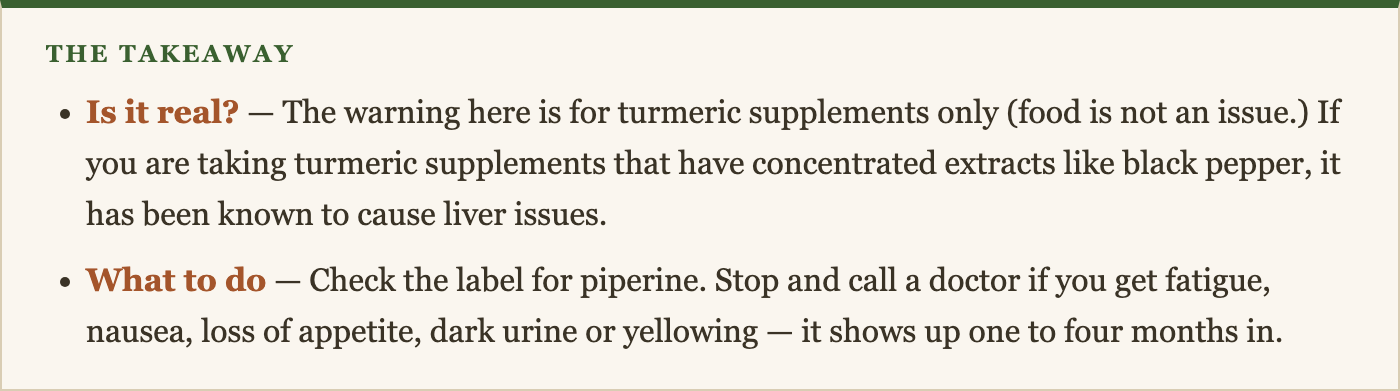
Turmeric does warrant a warning label but not for bleeding. The strongest evidence shows that turmeric can lead to liver injury:
“Turmeric appears to have become the most common cause of clinically apparent, herbal-related liver injury in the United States.”
NIH LiverTox, National Institute of Diabetes and Digestive and Kidney Diseases — LiverTox
LiverTox gives it a likelihood score of A, its highest category for a well-documented cause of liver injury.
One really important thing to keep in mind here is that turmeric in food poses literally no threat or health issue. Curcumin is barely absorbed when you eat it in food. The problem is specifically because of that, supplement makers create these sort of souped up turmeric supplements that totally jack up the absorption rates. They add things like black pepper extract or some other special delivery system that makes your body turn the absorption on turbo. And those are the things that have caused liver issues.
And even then, the numbers were relatively small. The US Drug-Induced Liver Injury Network reported ten cases in 2023. Of the ten, eight were women, and the median age was 56. Five were admitted to hospital and one died of acute liver failure.
If you are taking turmeric supplements keep an eye out if you start to feel fatigue, have nausea, dark urine or jaundice. See a doctor immediately.
“Highly bioavailable formulations of curcumin, which enhance the body’s ability to absorb the curcumin, may harm your liver.”
NCCIH, National Center for Complementary and Integrative Health, NIH — NCCIH
What Gets Left Out: Your Prescriptions

Supplement timing with medications is important and the following findings show why:
At VA Greater Los Angeles and UCLA, twenty patients taking long-term levothyroxine were given 1200mg of calcium with their dose daily for three months. The mean TSH rose from 1.6 to 2.7 mIU/L (P=0.008), but returned to a normal range when calcium supplements stopped. One in five patients had a TSH outside the normal range; one had a TSH as high as 7.8. Levothyroxine adsorbs to calcium carbonate so it should be taken four hours apart.
Calcium, iron, magnesium, zinc and aluminium can chelate quinolone and tetracycline antibiotics into a complex which the gut cannot absorb; this leads to lower blood levels of these medications (often over fifty percent). This doesn’t mean supplements are wasted, but that infections are not clearing.
Herbs like St John’s wort can lower levels of certain drugs by speeding up their metabolism through the CYP3A4 enzyme system.
One study found that St John’s wort reduced the blood concentration of HIV drug indinavir by 57%.
Vitamin K and anticoagulants
Warfarin, or Coumadin, is an oral anti-clotting agent used to prevent stroke in patients with atrial fibrillation. Vitamin K reduces effectiveness of warfarin.
One study found that INR levels — a measure of the blood’s clotting ability — were more stable when vitamin K intake remained consistent.
A 2015 analysis published in the New England Journal of Medicine estimated 23,005 visits to US emergency rooms each year from supplement-related adverse events. The study collected data across 63 EDs. Among patients presenting for supplements alone, a quarter (25.5%) came in because of weight-loss products and over two-thirds (65.9%) used herbal or complementary medicines.
Pharmacy consultations
If you are concerned that the medications you take might interact with a supplement, it is always worth asking your pharmacist to check potential interactions between your meds and supplements. This service is free at pharmacies.
The Iron Timing Rule That Actually Changes Your Numbers
Most useful rule: Take iron on alternate days rather than every day for greater absorption. Splitting a dose across one day does not help.
Researchers at ETH Zürich found that when people took oral iron, hepcidin levels remained high and blocked the body’s ability to absorb additional iron. It showed highest fractional absorption on alternate days with a trend toward fewer GI side effects. This means splitting your dose into two doesn’t help.
In fact, a 2020 trial at Huashan Hospital, Fudan University showed that adding 200 mg of vitamin C had no effect on the hemoglobin gain or overall iron absorption in 440 patients with iron deficiency anemia who used oral iron supplements over a three-month period. The trial compared those who took both iron plus vitamin C to people who just took iron.
In conclusion, vitamin C is not needed for hemoglobin recovery or iron absorption.
Note: This study only looked at adults diagnosed with iron deficiency anemia — if you have this condition and are treating it through supplements, consult your doctor before changing your regimen.
The Bottom Line
Most of us don’t have to make supplements a priority; however, separating iron from calcium and beverages with tannins can improve absorption. Take zinc if you need it (but do so in low doses) over a short period of time.
In addition, be mindful about the interactions between prescription medications and concentrated herbal extracts. These may pose significant risks for conditions such as thyroid control, antibiotic effectiveness, INR levels or liver injury — make sure to read labels carefully when buying these products.
This article is for general information and is not medical advice. If you take prescription medication — particularly a blood thinner, thyroid medication or an antibiotic — check supplement timing with your doctor or pharmacist before changing anything.

Joseph has been writing and editing for a wide variety of publications over the last decade. He loves covering news in the health and wellness space and has written extensively about all aspects of wellness for a wide range of publications.
Is your neighborhood healthy?
Get a free report on your tap water, air quality, walkability and more