Have you ever found yourself drinking out of a plastic cup that pulled out of a plastic sleeve and then put a plastic straw into it. By the third one you find yourself wondering if there might be a better way. Thankfully, there is. You don’t need to become an obsessive zero-waste guru to make a difference (although if that’s your bag, we salute you). All it takes is a few simple swaps, and get this, many of them are actually better for you and will save you money in the long run. Here’s where to start.
For more on microplastics and what to ditch first, see our guide microplastics and what to ditch first.
Switch to a Reusable Water Bottle
Americans consume around 50 billion plastic water bottles each year, and the EPA’s most recent figures put the recycling rate for PET bottles and jars at just 29.1 percent. The rest wind up polluting our landfills, incinerators and waterways. A one-time purchase could save you from contributing to that statistic.

By using one refillable bottle every day you’d potentially cut out 365 single-use bottles a year. Bottles made from stainless steel and glass are inert so don’t leach chemicals (even if they’re left in a hot car) and stainless steel bottles will also keep drinks cold for up to 24 hours and hot for up to 12 hours (far outperforming their single-use cousins). Glass bottles are also a great option if you’re worried about flavor transfer.
In 2024, a Columbia University team used a new laser-imaging technique to count the number of plastic particles in bottled water, finding an astonishing 240,000 bits of plastic per liter, up dramatically from previous estimates, and determined that about 90 percent of the particles were nanoplastics, tiny enough to penetrate our cells. And a separate study found that Americans who get all their water from plastic bottles ingest an estimated 90,000 more microplastic particles per year than people who drink from the tap (tap-water drinkers take in about 4,000). A filter pitcher and a reusable steel bottle check both boxes.
- Hydro Flask Wide Mouth Bottle — double-wall vacuum insulation, durable powder coat, keeps ice for 24 hours
- Nalgene Sustain Tritan BPA-Free Bottle — made from 50% reclaimed materials, nearly indestructible, wide mouth for easy cleaning
Replace Plastic Cling Wrap
Plastic wrap, which typically sees a few hours of use before it’s tossed, could leach plasticizers into your food, studies have found, especially if you use it to cover food in the microwave (the way most people use it, in fact, hence the FDA’s suggestion that you leave an inch of space between your food and the wrap if you’re planning to zap it).

Silicone stretch bags can be tossed in the dishwasher and even sealed tightly enough to keep food fresh in the freezer. Beeswax wraps (typically made of cotton coated with beeswax, jojoba oil, and a tree resin) mold to bowls and fruit with the heat of your hands to create an airtight seal, and they can be reused for as long as a year. Neither will ever be as flimsy and convenient as the plastic roll that’s probably still lurking in one of your kitchen drawers, but once you’ve used one of these reusable options, it’ll be hard to go back.
- Bee’s Wrap Reusable Food Wraps — GOTS-certified organic cotton, compostable at end of life, works on bowls, cheese, cut fruit
- Stasher Platinum Silicone Reusable Bags — pinch-loc seal, safe from freezer to microwave to dishwasher, lasts for years
Switch Your Food Storage Containers
Plastic may be convenient, but that convenience can come with a health risk. Research published in Scientific American reveals that many so-called “BPA-free” plastics contain compounds that have estrogenic activity, and that these chemicals migrate into foods faster when dishes are put through the dishwasher or microwaved again and again. Dishes that have become scratched, warped or cloudy are especially likely to leach chemicals, so toss them when you notice changes like these.

“even picomolar concentrations (less than one part per trillion) of BPS can disrupt a cell’s normal functioning”
— Cheryl Watson, Professor, biochemistry/cell biology, University of Texas Medical Branch at Galveston
Glass won’t stain or absorb odors because it’s non-reactive, and it goes from freezer to oven without a second thought. Quality glass containers last decades, so you won’t be replacing them every few years the way you do with plastic. They cost more up front, but because you stop replacing them they’re the cheaper option in the long run.
- Pyrex Simply Store Glass Food Storage Set — oven, microwave, freezer, and dishwasher safe; snap-lock lids; clear for easy identification
Shampoo Bars and Bar Soap
Those little shampoo bottles can add up. The average American uses one plastic shampoo or body wash bottle every two months. That’s 24 plastic bottles per year for a family of four just from those two products. And while technically many of those plastic bottles are recyclable, in reality, many of them don’t make it through the sorting process due to their small size and/or product residue.

Concentrated shampoo bars are also more effective and can last as long as two or three bottles of liquid shampoo (which contains up to 80% water). Many shampoo bars are free from sulfates and are pH balanced, creating a nice lather and rinsing out your hair squeaky clean. Bonus: Since there’s no water in shampoo bars, there’s less of it to use each time you shampoo, meaning a shampoo bar will typically cost you less per wash than liquid shampoo. The same logic applies to bar soap for washing your body, with no pump and no plastic.
- HiBar Shampoo Bar — salon-quality formula, paper packaging only, vegan and cruelty-free, available for all hair types
Reusable Produce Bags
The thin plastic bags in the bins at the grocery store, the kind for holding produce, are so light you barely notice them, which is part of the problem. They’re too light to be picked up by curbside recycling programs and too light to stay put, so they blow away and into waterways. In Pew Charitable Trusts’s 2020 study on flexible plastics, thin bags like these were one of the hardest-to-recycle plastic types.

Reusable mesh produce bags are another great option to ditch plastic bags. They’re also extremely lightweight (so the cashier won’t add weight onto your grocery bill), clear (so the cashier can easily see what type of produce you’re buying), and easy to wash. Buy a six-pack and you’ll rarely use the store’s produce bags again.
- Reusable Mesh Produce Bags (9-pack) — ultra-lightweight organic cotton mesh, assorted sizes, drawstring closure, machine washable
Rethink Your Coffee Routine
Plastic, aluminum, coffee: what could possibly be the problem with single-serve coffee pods? Unfortunately for John Sylvan, inventor of the K-cup, everything. Made up of a mixture of aluminum, plastic and coffee, it’s almost impossible to recycle a coffee pod through your standard household collection. Tens of billions of them a year in fact end up in landfill around the world, making single-serve coffee pods one of the great examples of convenience at a cost. Sylvan himself has publicly expressed his remorse at having come up with such a bad idea.
“I feel bad sometimes that I ever did it.”
— John Sylvan, Inventor of the K-Cup single-serve coffee pod

“It’s like a cigarette for coffee, a single-serve delivery mechanism for an addictive substance.”
— John Sylvan, Inventor of the K-Cup single-serve coffee pod
For better-tasting coffee (the grounds steep instead of being blasted through with pressurized water via a filter), a French press is an inexpensive ($30-ish) investment that also produces zero waste, except for the actual coffee grounds (compost those). If you can’t give up your Keurig, consider a reusable pod filter to avoid the waste associated with single-use pods.
- ESPRO Press P3 French Press — dual micro-filter system produces a cleaner cup than standard French presses, stainless steel, no plastic
- Reusable K-Cup Coffee Filter — stainless steel mesh, works in most Keurig models, fill with your own ground coffee, eliminates pod waste
Check the Tea Bag
Tea bags, especially the fancy pyramid-shaped kind, may not be the paper product you assume. Some are made of a nylon or PET plastic. McGill chemists discovered that steeping just one of these bags at tea-brewing temperature released some 11.6 billion microplastic particles and 3.1 billion nanoplastic particles into a cup, thousands of times greater than other previously measured instances of plastic in food. Loose-leaf tea steeped in a steel infuser sidesteps the dilemma, and is less expensive per cup.

- Stainless Steel Tea Infuser Basket — fine mesh, fits most mugs and teapots, dishwasher safe, no bag at all
- Organic Loose Leaf Tea Sampler — several blends in tins or paper pouches, cheaper per cup than pyramid bags
Carry Reusable Utensils
Plastic utensils, forks, knives and spoons, provided with takeout meals last an average of only 20 minutes of use before being tossed. An estimated 40 billion plastic utensils are thrown away each year in the U.S., according to Earth Day Network. And they’re so light they fall through the cracks, literally, at recycling facilities, meaning almost none are recycled.

Try a set of bamboo or stainless steel utensils for work, on planes, at catered events, basically anywhere you’d otherwise be presented with plastic forks. Once you form the habit (a week, give or take), it’s hard to imagine using plastic forks at the deli counter again. Keep a set in your bag or a desk drawer.
- Bamboo Utensil Travel Set — fork, knife, spoon, chopsticks, straw, and cleaning brush in a compact carrying case, under 3 oz
Put a Filter on the Laundry
Polyester, acrylic and other synthetic fabrics are among the biggest sources of microplastic pollution. When clothes made from these materials are washed, the tiny fibers they shed pass through wastewater treatment plants and eventually end up in rivers and oceans. Cotton-polyester blends shed fewer fibers, but a University of Plymouth study found that 6 kilograms of acrylic clothing released as many as 700,000 microfibers in a single wash. Polyester fared little better. So next time you’re doing laundry, remember: fleece and athletic wear are among the biggest offenders.

There’s no need to ditch your wardrobe. But you can do things to reduce shedding. Washing clothes in cold water and choosing shorter wash cycles can help, and so can washing full loads (as opposed to single items), because there’s less agitation between the fabric and the drum. There are also fiber-catching wash bags and laundry balls you can add to your wash, which capture many of the fibers that synthetic fabrics would otherwise shed. And when it comes to replacing worn-out fleeces, you could always opt for items made from natural fibers such as wool or cotton instead.
- Guppyfriend Washing Bag — fine-mesh bag that holds synthetics during the wash and traps the fibers they shed
- Cora Ball Microfiber Laundry Ball — goes in loose with any load, catches fibers before they reach the drain, made from recycled plastic
Shop Bulk When You Can
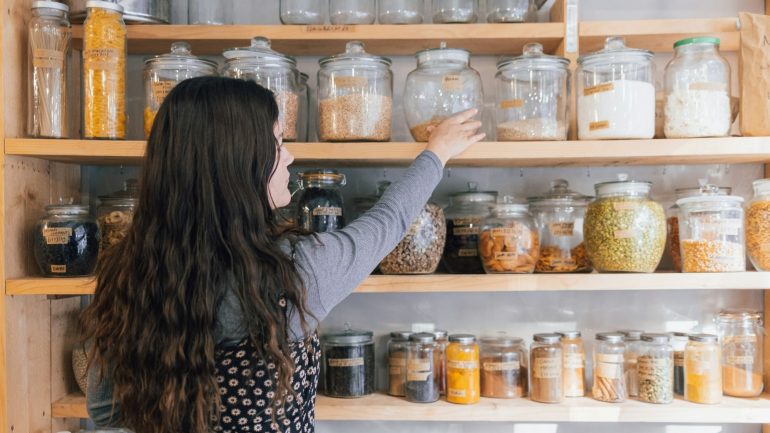
Shop co-ops or grocery stores with bulk bins, you pay for what you buy (not the packaging), and it’s often less per ounce than buying the packaged product. Grains, nuts, dried fruit, coffee, spices, pasta, and some cleaning products can be purchased this way. Bring your own bags or containers if possible.

Try to limit your shopping to unpackaged or minimally packaged items when possible. Plastic isn’t the only culprit, and you should think about all of the cardboard, paper, and energy it took to create and transport those packages. Buy in bulk. Stores like Whole Foods, Natural Grocers, and many co-ops (especially independent ones) have great bulk sections. Bring your own containers if they don’t have bins (glass containers are best since it’s easy to subtract the weight of the container at the check out). Try picking out a handful of bulk items (oats, rice, almonds, etc) and challenge yourself to see how many packages you can avoid bringing into your home in a month.
A Four-Week Starter Plan
This may seem like a lot, but remember, it’s not a weekend transformation. If you implement one item a week, that’s only a new habit and a small purchase each week for a month.
Challenge yourself to make one small plastic-free swap per week for a month. Week one: ditch plastic water bottles and produce bags for a refillable water bottle and washable produce bags, the two items you’re likely to use the most during the week. Week two: toss scratched-up plastic containers for glass and replace plastic wrap and bags with beeswax wraps or silicone bags. Week three: swap shampoo and body wash for shampoo and soap bars, starting with the next bottle you need to buy. Week four: swap out coffee pods for a French press or reusable pod, plastic tea bags for paper ones or loose-leaf tea, and add a fiber-catching bag to the laundry. By the end of the month you’ll have noticeably less waste in your recycling bin, and you’ll likely have saved some money too, since none of these items cost more than their plastic counterparts over the course of a year.
Bring a water bottle and mesh produce bags to the grocery store. It doesn’t sound earth-shatteringly different, but these choices add up. Before you know it, six months from now you’ll be amazed to see how much smaller your recycling bin is.
Cut your household waste even further by using your own natural cleaning products for the whole house.

Joseph has been writing and editing for a wide variety of publications over the last decade.
Is your neighborhood healthy?
Get a free report on your tap water, air quality, walkability and more