When I was growing up, my favorite soft drink was probably 7Up, or Sprite, whichever was available at that point. Cokes were always around. Sodas were kind of the thing you drank all the time when you were a kid.
Now I don’t drink them much at all, if ever. I genuinely can’t remember the last time I had an actual soda.
That arc, from default childhood drink to something you quietly stopped buying, is happening across the whole country, and the regulators caught up to the instinct: the FDA banned brominated vegetable oil in 2024, California pulls four more additives from shelves in 2027, and the WHO’s cancer arm put aspartame on its “possibly carcinogenic” list.
Not to brag, but I feel like I was ahead of the curve here. At some point in my early twenties I just realized soda wasn’t doing me any good, and I’d rather spend those guilty pleasures somewhere else, because I didn’t even really love it that much. Some people are totally addicted to Diet Coke, drinking twenty a day, and I’m just like, wow, that can’t be great.
I know politics makes this complicated, the overreach of certain entities can feel like a lack of personal choice. But no one knows about cancer-causing dyes or whatever they’re pulling. And honestly, if you put the version with all the terrible ingredients next to the one without, side by side, you think you could really tell the difference?
How the Rankings Work
Sugar counts double when you drink it rather than eat it.
“When you drink a sugar-sweetened beverage, it’s absorbed very quickly into your bloodstream, causing an almost immediate spike in your blood sugar and insulin levels,” explains Dr. Frank McGeorge, an emergency physician with Henry Ford Health who covers medicine for Detroit’s Local 4. The stakes aren’t abstract. “Eating too much sugar can lead to fatty liver disease, heart disease, diabetes, high blood pressure,” says Halley Sapperstein, a registered dietitian at Henry Ford West Bloomfield.
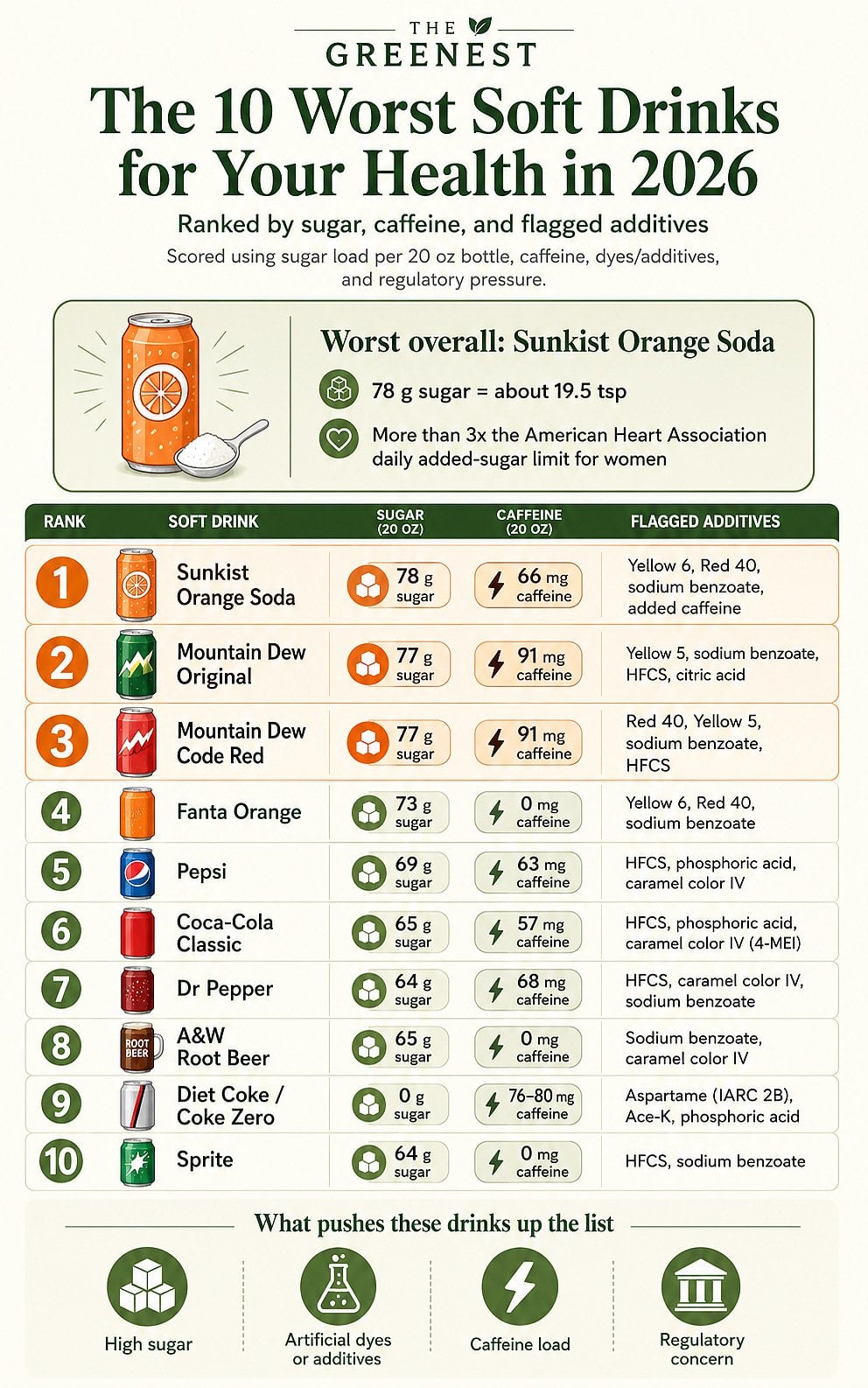
The American Heart Association recommends women cap added sugar at 25 grams per day. A single 20-ounce bottle of nearly every soda on this list blows past that ceiling before lunch.
The Full Countdown, From 10 to 1
10. Sprite
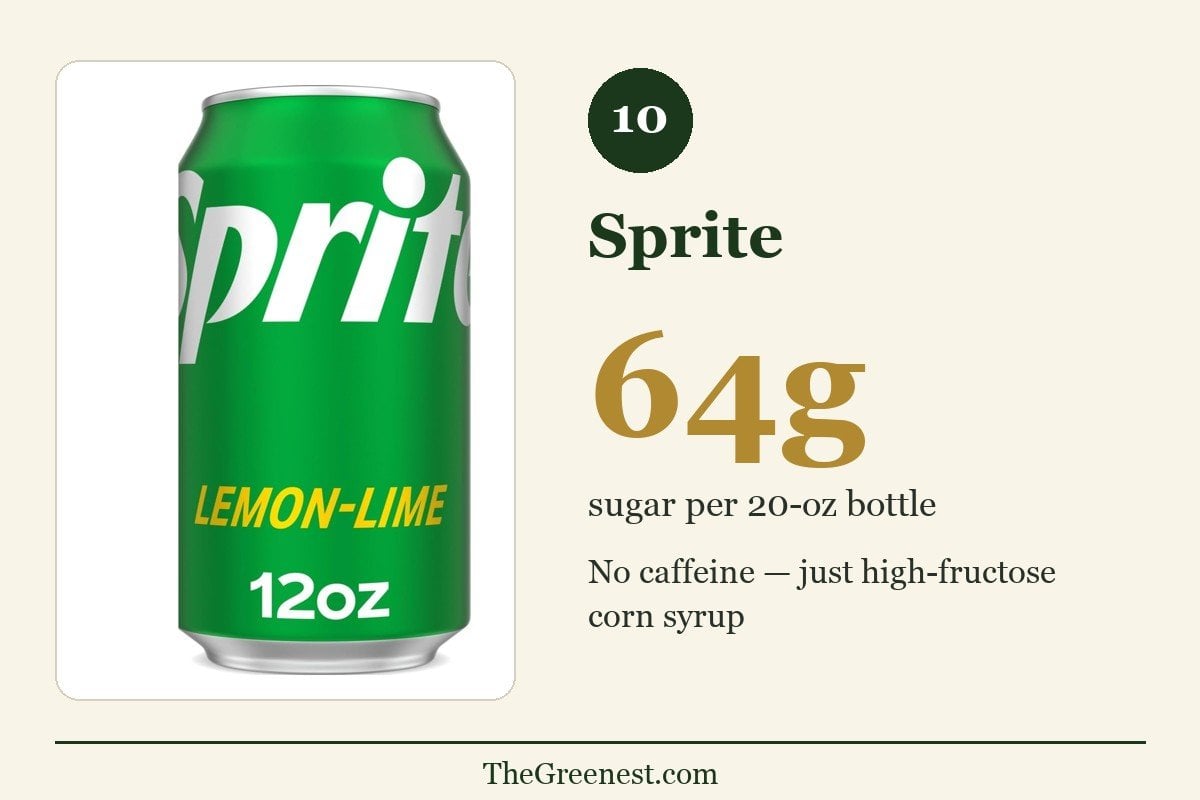
Sprite earns the bottom slot mostly because of what it lacks: no caffeine, no artificial color, and a label that reads cleanly enough that parents hand it to kids without much thought. The problem is the 64 grams of sugar from high-fructose corn syrup in a 20-ounce bottle, plus sodium benzoate as the preservative.
9. Diet Coke and Coke Zero
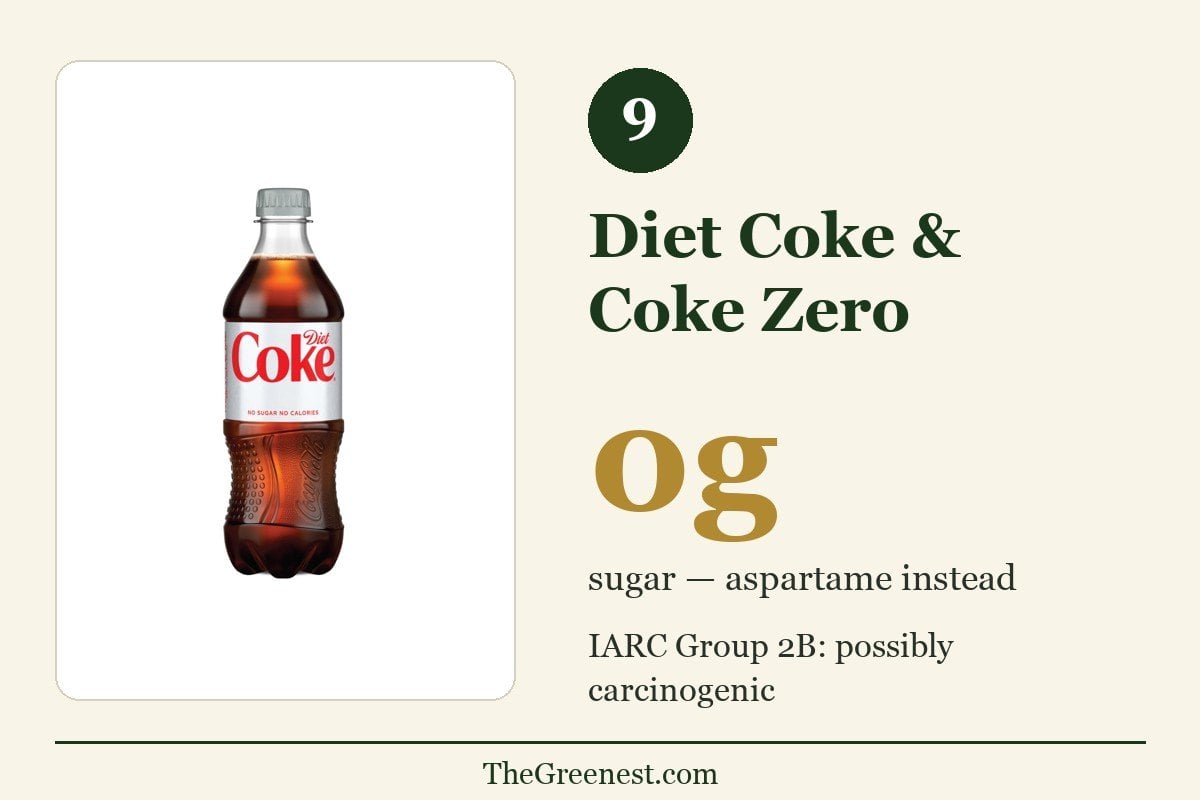
Zero-sugar formulations dodge the calorie problem but introduce a different one. Both rely on aspartame, now in IARC’s Group 2B based on limited evidence for liver cancer, plus acesulfame potassium as a co-sweetener.
There’s also a behavioral cost that doesn’t show up on the label. “When I drink a diet soda, I crave bad foods,” says Dr. Jeremy London, a board-certified cardiovascular surgeon, who puts soda at a three or a four on his ten-point harm scale: “The regular soda is high in sugar, a bunch of empty calories. If we look at the actual data as far as how it impacts longevity, I’d give it a three or a four.” I
tried Diet Coke when I was younger and just didn’t think too much about it. I thought it wasn’t as good. When you’re active and young, you think less about that stuff.
8. A&W Root Beer
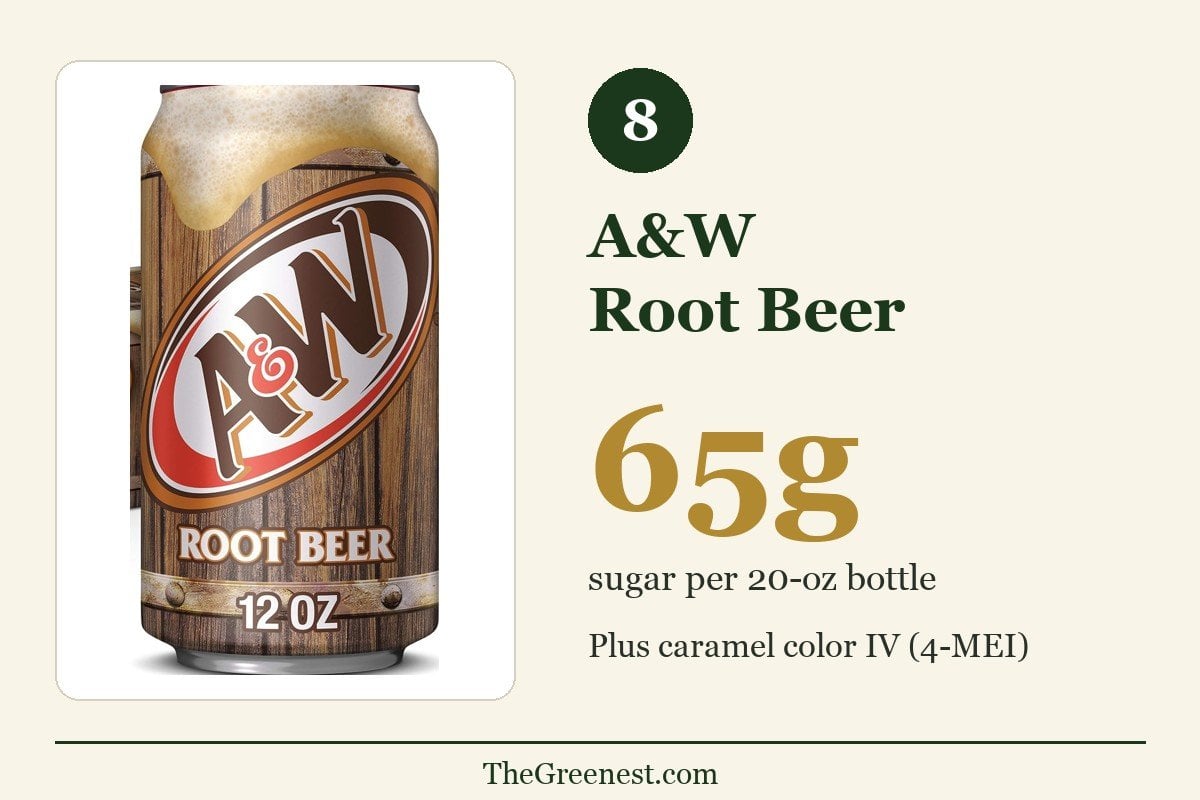
The retro packaging hides 65 grams of sugar per 20-ounce bottle, sodium benzoate, and caramel color IV, whose ammonia-based processing generates 4-MEI, a possible human carcinogen under California’s Proposition 65.
A 2014 Consumer Reports analysis found A&W exceeded the Prop 65 threshold per can. Root beer hits me right in the nostalgia. Even when I was young, a root beer float was so obviously a sugar bomb. It’s like, “Whoo!” You get that jolt and start bouncing off the walls. Around the same era, ginger ale became a bit of a cult thing for me.
I was going around in college trying to find these little micro companies making small-batch, very very spicy ginger ales. Those were great. I have zero idea what was in them. Because they were small batch I assumed they were somewhat more natural, but you never knew, and this was before I even looked at any labels. Anyway, I’m digressing here…
7. Dr Pepper
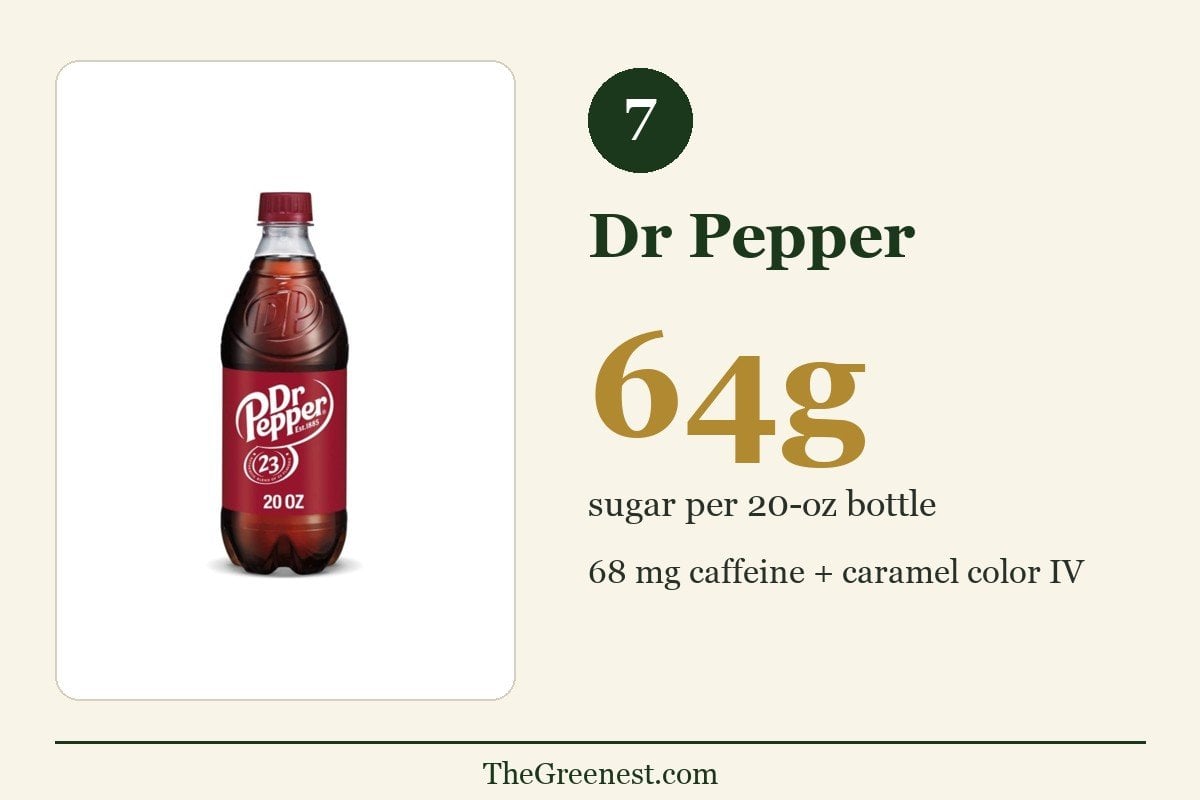
The “23 flavors” branding obscures a familiar profile: 64 grams of sugar, 68 milligrams of caffeine, sodium benzoate, and caramel color IV. “Sugary drinks also stimulate the release of feel-good brain chemicals like dopamine and serotonin,” Dr. McGeorge explains, “and that can make us crave these beverages even more and frankly make it tougher to kick the habit.”
6. Coca-Cola Classic
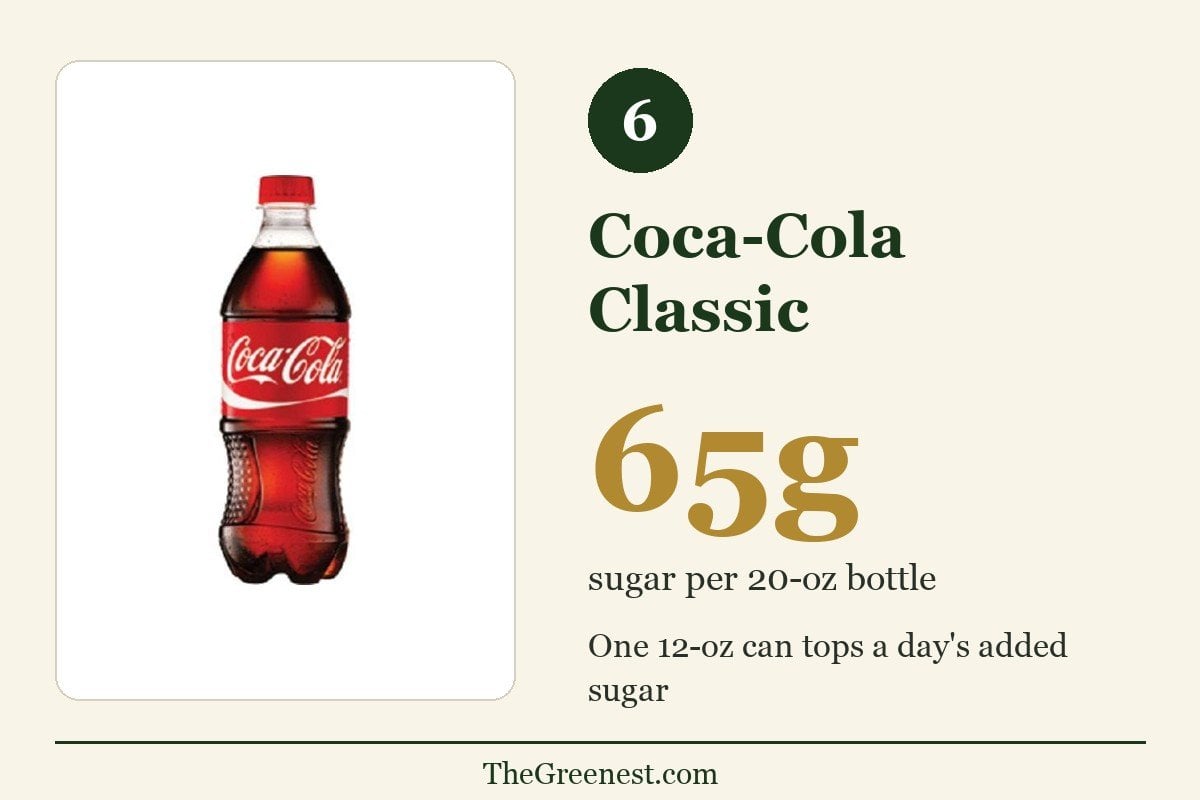
Coke’s 20-ounce bottle delivers 65 grams of high-fructose corn syrup, 57 mg of caffeine, phosphoric acid, and caramel color IV. “A 12-ounce soda has about 39 grams of added sugar, which is more than we’re telling the average person to consume in a day,” says Halley Sapperstein, a registered dietitian at Henry Ford West Bloomfield. One can. More than a full day’s allowance.
5. Pepsi
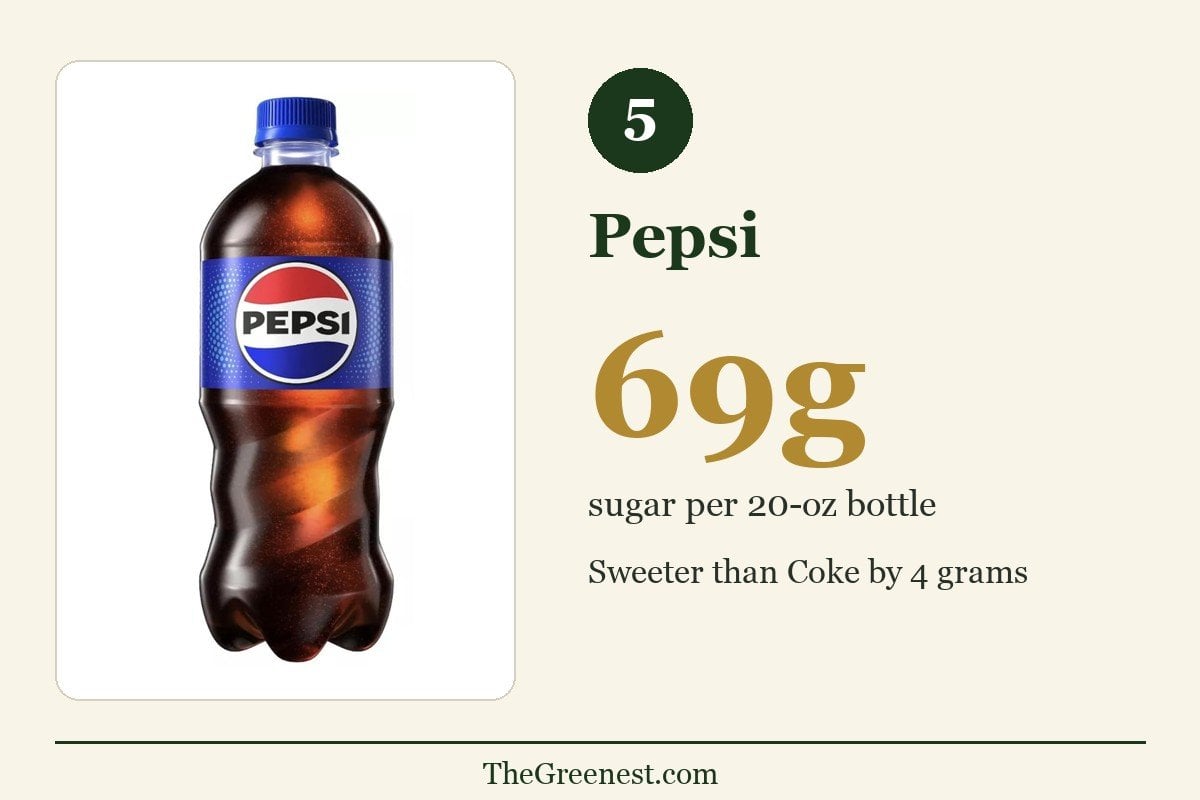
Pepsi runs slightly sweeter than Coke (69 grams of sugar versus 65 in a 20-ounce bottle) with a similar caffeine load and the same caramel color IV and phosphoric acid concerns.
4. Fanta Orange
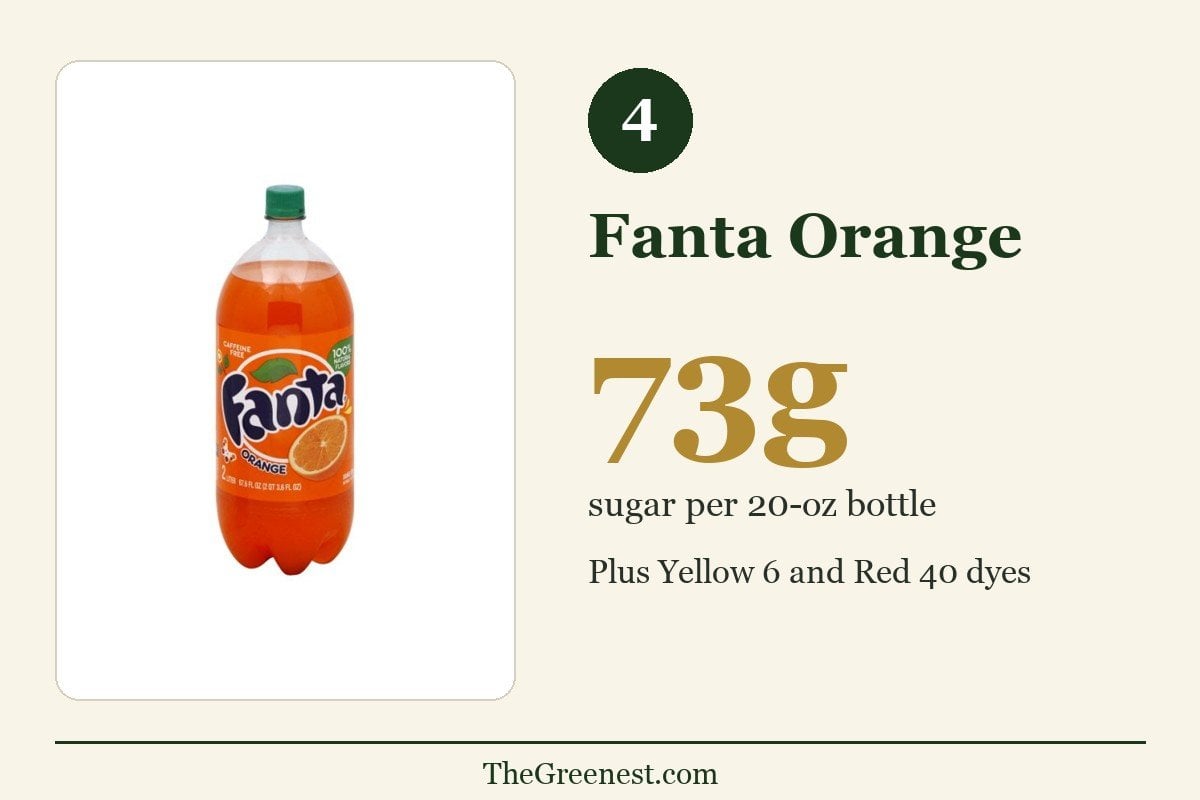
Fanta packs 73 grams of sugar into 20 ounces alongside Yellow 6 and Red 40, dyes a 2021 California EPA report linked to behavioral effects in some children.
3. Mountain Dew Code Red
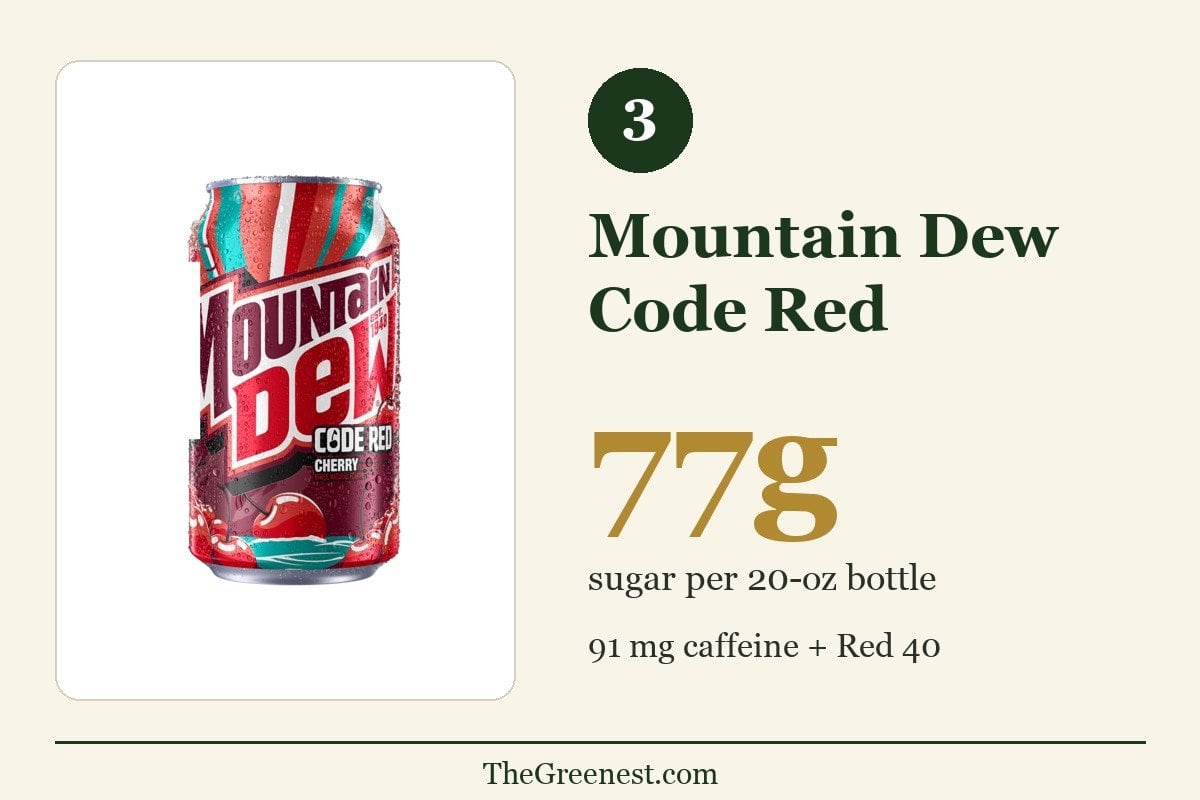
Code Red is basically the same drink as the original Mountain Dew. It has a ton of caffeine and sugar (just a tiny bit less than the original). But still, it’s loaded with the stuff.
The only real difference here is that it has Red 40 dye. The thing is, you’d kind of expect with a name like “Code Red” that it would have way more of the bad stuff than regular Mountain Dew. Code Reds are typically not good things.
But we don’t run Mountain Dew’s marketing department, so what do we know.
2. Mountain Dew Original
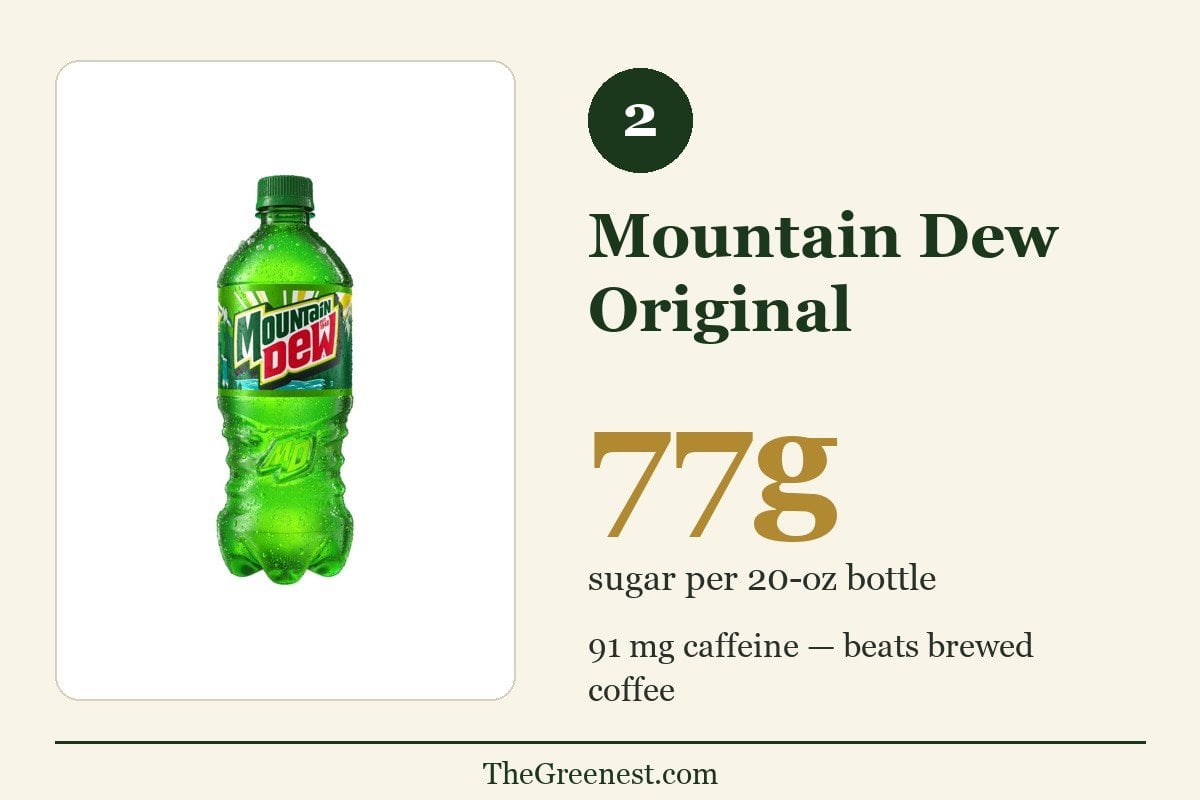
Mountain Dew was playground legend when I was a kid. Someone found out it had the most caffeine of anything, and that just blew your mind when you were younger, because you think of coffee, or a darker soda, as the caffeinated ones. I’m not sure why, but that’s the way you think about it. Then everyone was like, woah. Some kid would drink two and swear he had heart palpitations. I don’t know if anyone really did, but that’s what kids said. The lore was directionally right. The base formulation carries 77 grams of sugar and 91 milligrams of caffeine in a 20-ounce bottle, more than a cup of brewed coffee, plus Yellow 5 and enough citric acid to land the pH around 3.0. A 2013 review in General Dentistry documented enamel loss specifically associated with Mountain Dew consumption.
1. Sunkist Orange Soda
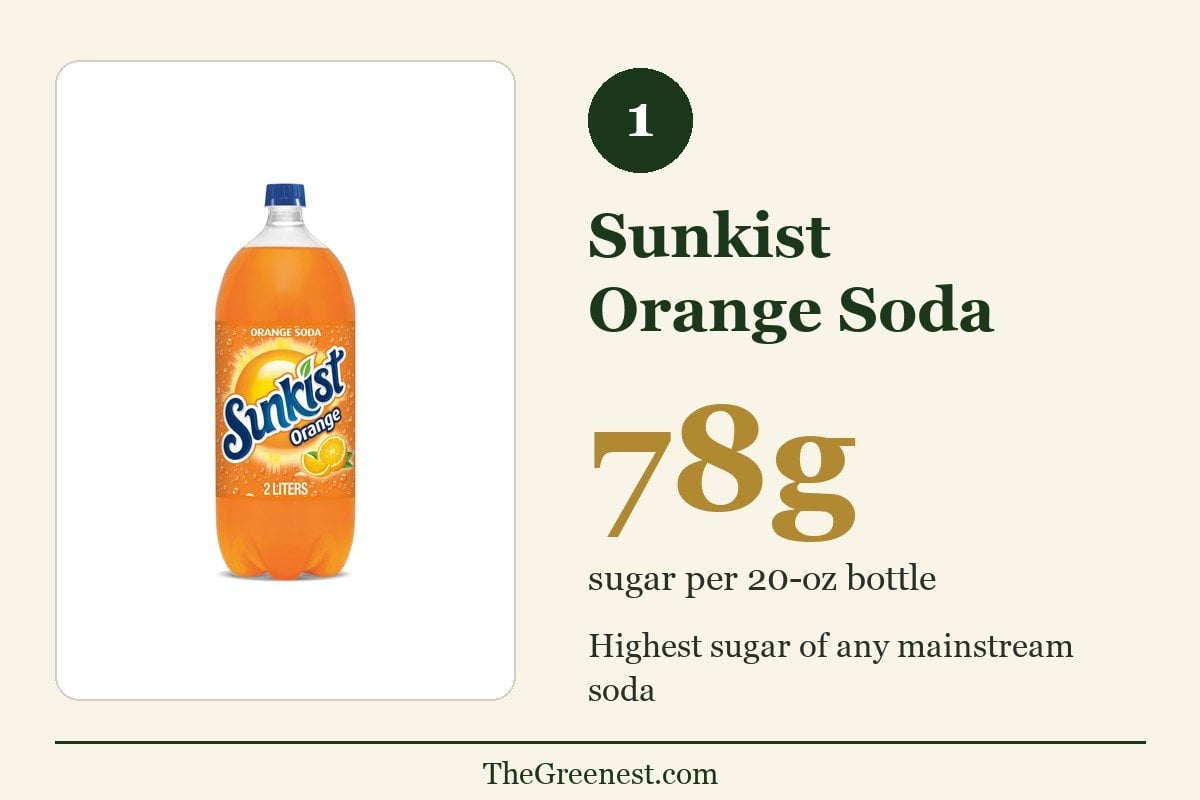
Sunkist takes the top slot for one stat that surprises most people: at 78 grams of sugar per 20-ounce bottle, it carries the highest sugar load of any mainstream soft drink on the U.S. market. More than Coke. More than Pepsi. More than Mountain Dew. It also carries Yellow 6, Red 40, and a 66-mg caffeine kicker nobody expects in an orange soda.
“None of us would take 14 packets of sugar and put it into either a cup of coffee or into a glass of water and drink it all at once,” Dr. McGeorge points out. “It really highlights the idea that these sodas are insanely loaded with sugar and we just need to avoid them.”
If I saw a kid chug a Sunkist in front of me, I probably wouldn’t say anything. But I’d think about how you used to be able to do that when you were younger. We didn’t know then what we know now. You’d just hope he or she wasn’t having another one.
Two “Diet” Surprises That Aren’t Safer
My own go-to these days, when I want something that isn’t water, is one of those lightly flavored sparkling sodas. And I’ll be honest: I don’t know if those are any healthier.
I don’t know what they’re totally made of. I don’t know if anyone knows. So this section is partly for me. Caffeinated sparkling waters have proliferated since 2023, and several brands now layer 150+ mg of caffeine into seltzer with added flavors.
The labels read like LaCroix, but the metabolic impact lands closer to an energy drink. “Zero sugar” sports drinks like Powerade Zero and G Zero rely on sucralose and acesulfame potassium.
Cleaner Soft Drink Swaps to Actually Try
Sapperstein’s advice on replacements is more specific than the usual “drink water” line. “Some alternatives to sugar-sweetened beverages would be sparkling water, or if you have a SodaStream at home, that’s an awesome alternative,” she says. “What is not a good alternative would be any type of juice. Apple juice, orange juice, fruit juice, I would stay away from, because you’re still drinking sugar.”
I learned the juice lesson myself with Orangina. I used to drink it a bit, and then I realized it had quite a bit of sugar too, so I kinda went away from that as well.
- OLIPOP Prebiotic Soda — 9 g of prebiotic fiber and only 2–5 g of sugar per can; the cola and root beer flavors are the closest clean swap for legacy soda brands
- Zevia Zero Sugar Soda — zero calories, zero artificial sweeteners or dyes, sweetened entirely with stevia; the variety pack covers cola, ginger ale, and orange
- Spindrift Sparkling Water — made with real squeezed fruit, 2–3 g of sugar per can, and a label with nothing to hide
What This Looks Like at the Gas Station
If I could tell my ten-year-old Kentucky self one thing about all this, it’d be that there’s really not much point to it. Look, you should have your splurges if that’s what you want.
I was just lucky that soda was never really my splurge, so quitting it was never the hard thing for me. Breaking the habit takes about three weeks, by Sapperstein’s estimate. “It’s possible, but you just have to work and you have to make those substitutes,” she says.
For whatever it’s worth, my own substitute turned out to be the least interesting one available. When I’m at a gas station now, I really just get water. It’s the thing I drink the most.
The 10 Worst Soft Drinks at a Glance
| Rank | Soda (20 oz) | Sugar | Caffeine | Flagged add-ins |
|---|---|---|---|---|
| 10 | Sprite | 64 g | 0 mg | HFCS, sodium benzoate |
| 9 | Diet Coke / Coke Zero | 0 g | 76–80 mg | Aspartame (IARC 2B), Ace-K, phosphoric acid |
| 8 | A&W Root Beer | 65 g | 0 mg | Sodium benzoate, caramel color IV |
| 7 | Dr Pepper | 64 g | 68 mg | HFCS, caramel color IV, sodium benzoate |
| 6 | Coca-Cola Classic | 65 g | 57 mg | HFCS, phosphoric acid, caramel color IV (4-MEI) |
| 5 | Pepsi | 69 g | 63 mg | HFCS, phosphoric acid, caramel color IV |
| 4 | Fanta Orange | 73 g | 0 mg | Yellow 6, Red 40, sodium benzoate |
| 3 | Mountain Dew Code Red | 77 g | 91 mg | Red 40, Yellow 5, sodium benzoate, HFCS |
| 2 | Mountain Dew Original | 77 g | 91 mg | Yellow 5, sodium benzoate, HFCS, citric acid |
| 1 | Sunkist Orange Soda | 78 g | 66 mg | Yellow 6, Red 40, sodium benzoate, caffeine added to orange soda |

Cory Jones has spent 20 years in media and publishing and now leads the data and editorial operation behind The Greenest. He built and maintains the site’s Neighborhood Wellness Score — a proprietary dataset scoring food access, walkability, air quality, healthcare access, and health outcomes across 18,356 U.S. ZIP codes, drawing on CDC PLACES data, EPA air quality readings, and verified location intelligence. He turned 50 last year, is a huge fan of Rancho Gordo beans, and tries to work out more than he actually works out.
Is your neighborhood healthy?
Get a free report on your tap water, air quality, walkability and more